ekie 2F Ekiebal Clinic & Services, Hiroshima Station
ekie 2F Souvenir Shop, Hiroshima Station
Sheraton Grand Hiroshima Hotel
Japanese Restaurant Miyabi-Tei
Sheraton Grand Hiroshima Hotel
Sheraton Grand Hiroshima Hotel
12-1 Wakakusacho, Higashi Ward, Hiroshima, 732-0053
Steps
12,067
Distance
8.80 KM
Flights Climbed
1
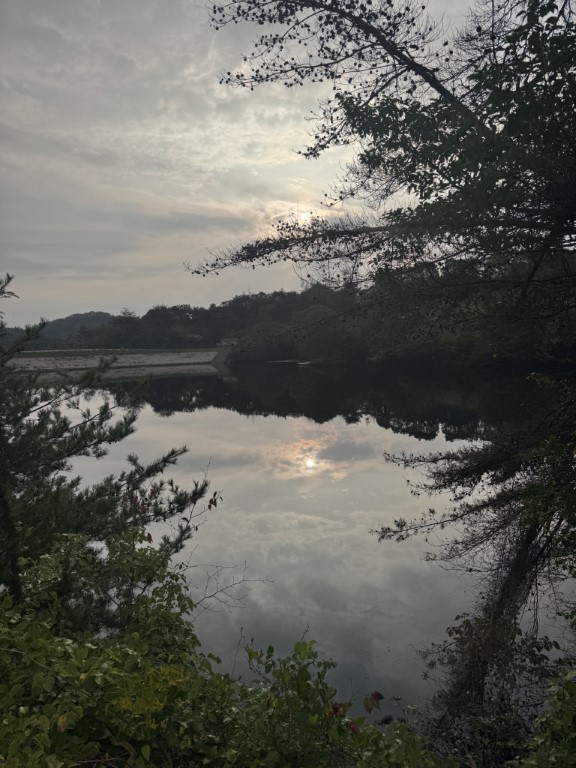
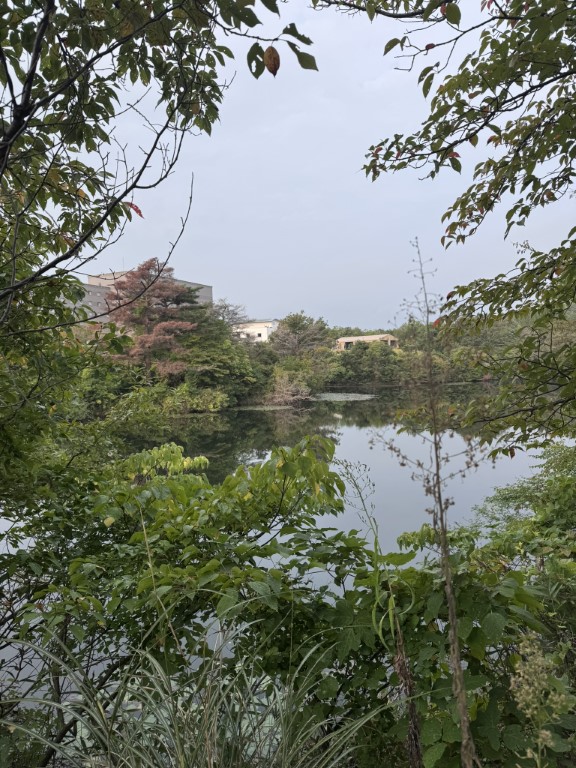
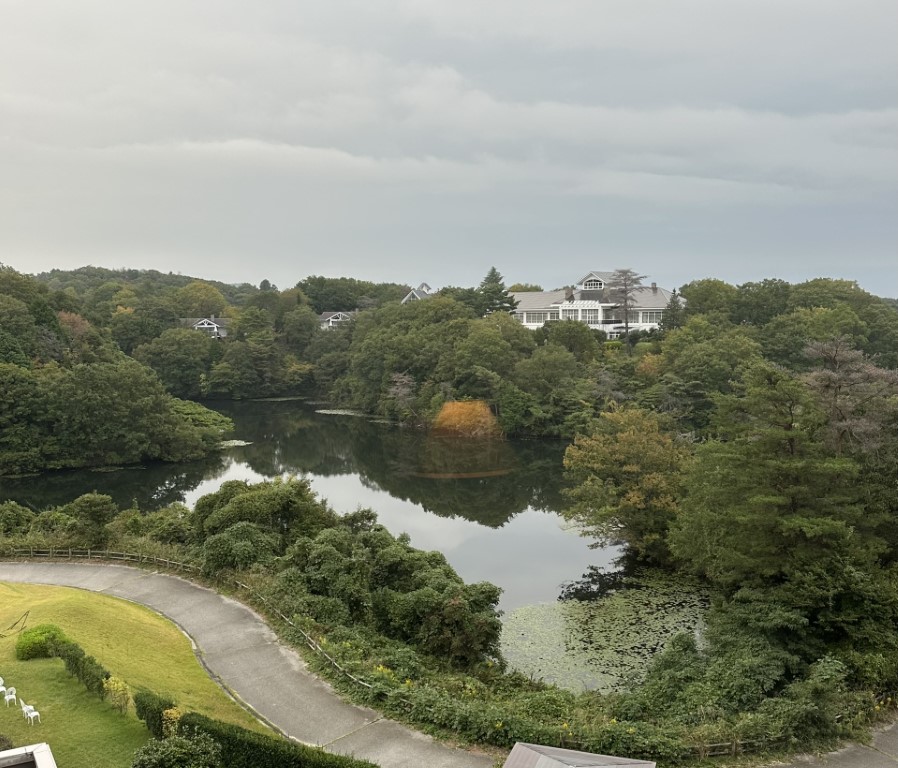
The attendant had scheduled us for a late shuttle to the airport because we had hoped to be able to sleep in, but our jet lag got the best of us and we were both awake early in the morning. We decided to take a walk through the beautiful garden area next to the hotel along the river before catching an earlier shuttle to the airport since we didn't want to drag our bags again for the five minute walk. We bought tickets for the Hiroshima Airport Bus to take us to Hiroshima station, which was about a 50 minute ride. We were glad we queued early as by the time the bus arrived, there was a long line of men and women in suits behind us waiting to go to downtown.
The bus dropped us off on the street level of the train station, which turned out to be a problem for us because we could see our hotel next door but the only way in from ground level was up a set of stairs. We walked back to the train station and found an elevator to the second floor where there was a straight walk-in to the Sheraton Grand Hotel. A little better signage and communication from the hotel would have saved us 10 minutes of lugging our bags around. While the entry was on the second floor, reception was upstairs so we had to switch elevators. Janie got us checked in and we left our bags with luggage services and headed back to the train station.
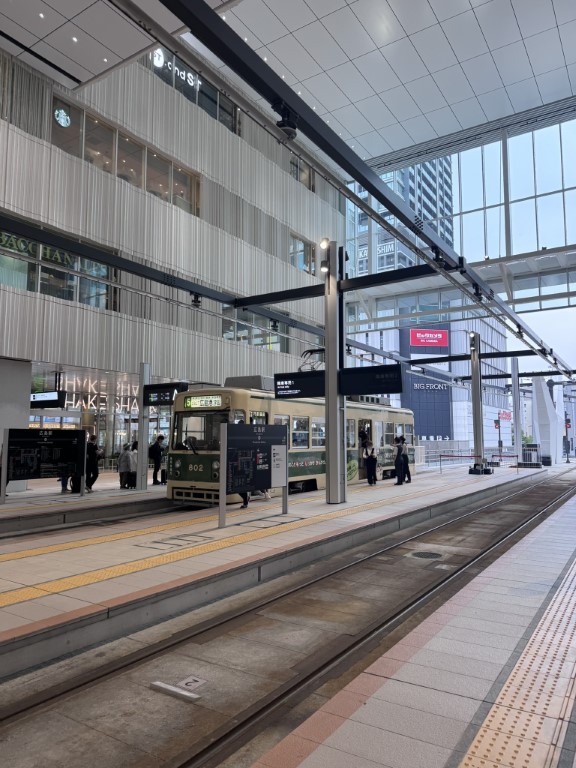
The Hiroden, or Hiroshima street car service, was located at the far end of Hiroshima station so we had quite a bit of a walk from the hotel despite it being "steps away" from the train station. We found this to be true throughout Japan due to the size of the train stations. Luckily thanks to recent renovations, the streetcar line is on the same floor as the main train station and our hotel entrance. The queue for the first train heading to Peace Memorial Park was long so we waited for the next tram that had less of a line. The directions we were given were to tap our iPhone Suica cards after boarding but this was not necessary due to the flat city rate. We got off at Genbaku Dome-mae station where we needed to go to a specific exit where they had NFC readers for phone Suica cards.
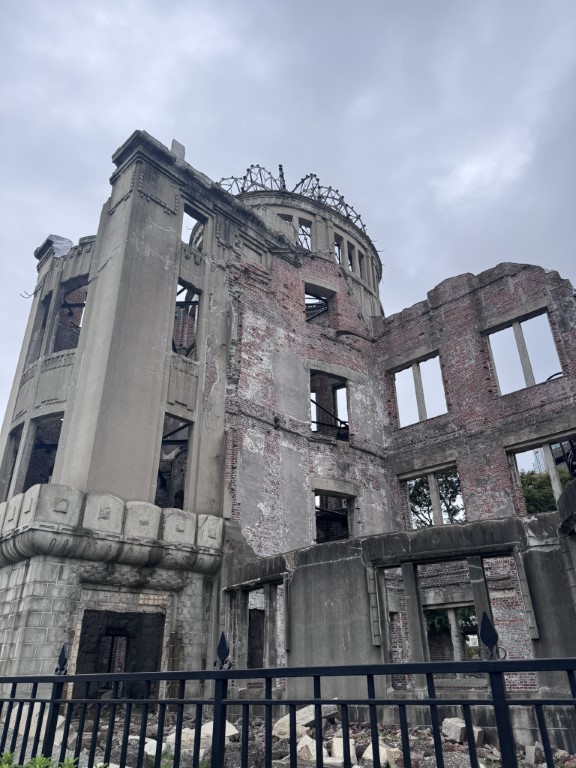
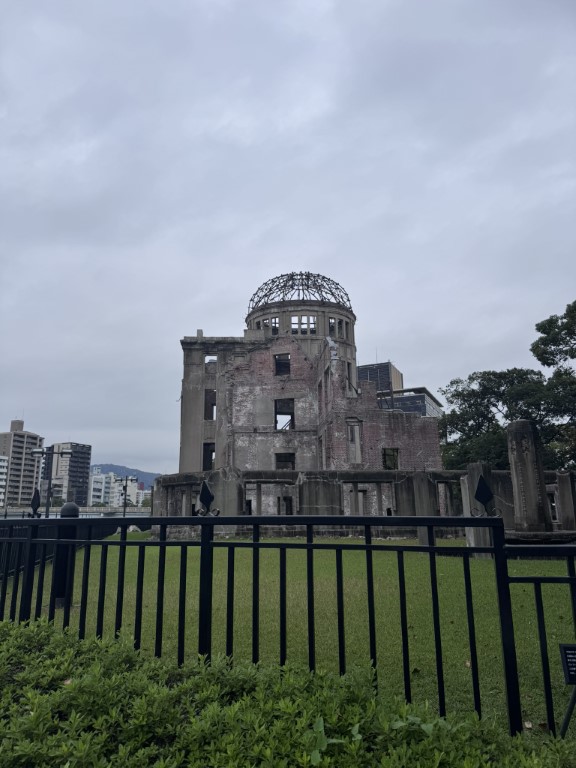
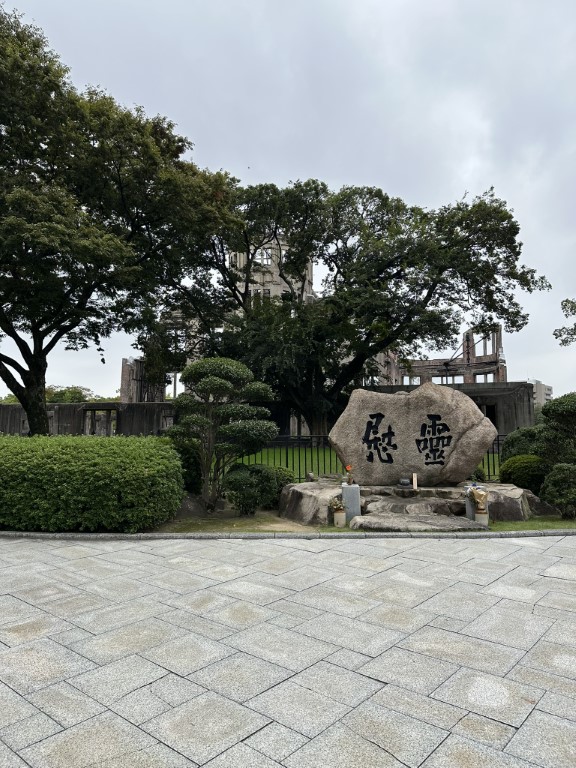
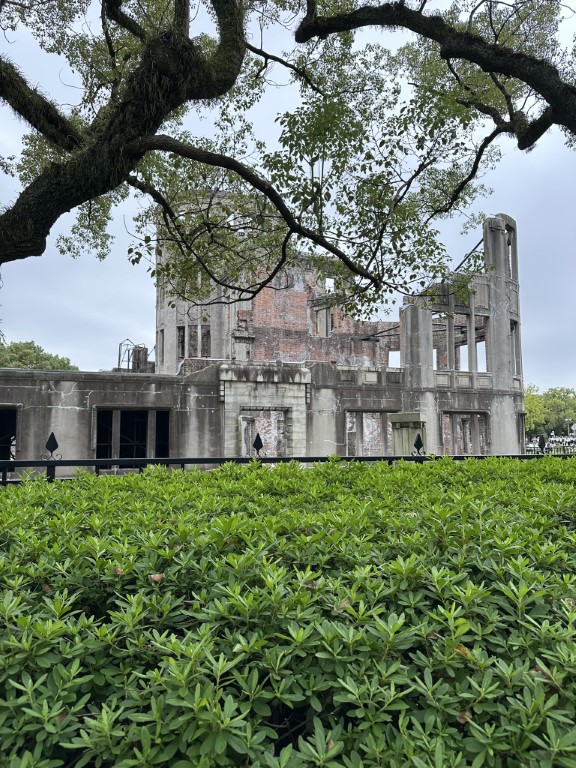
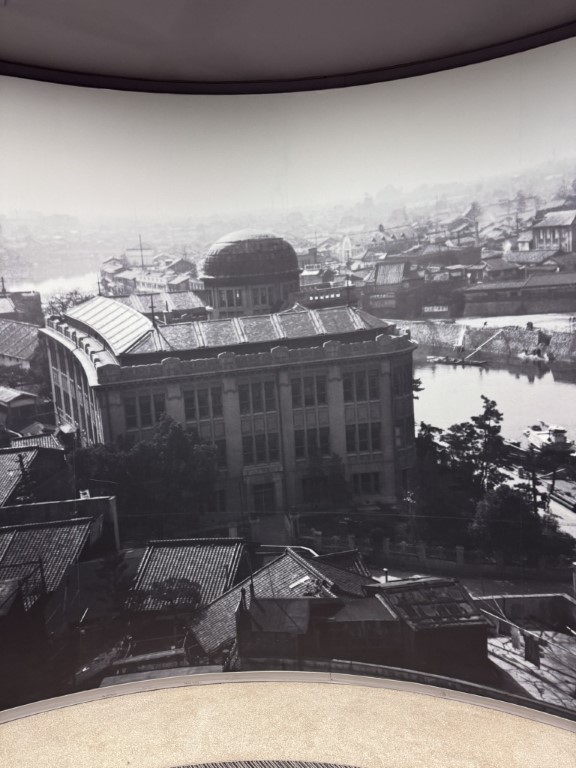
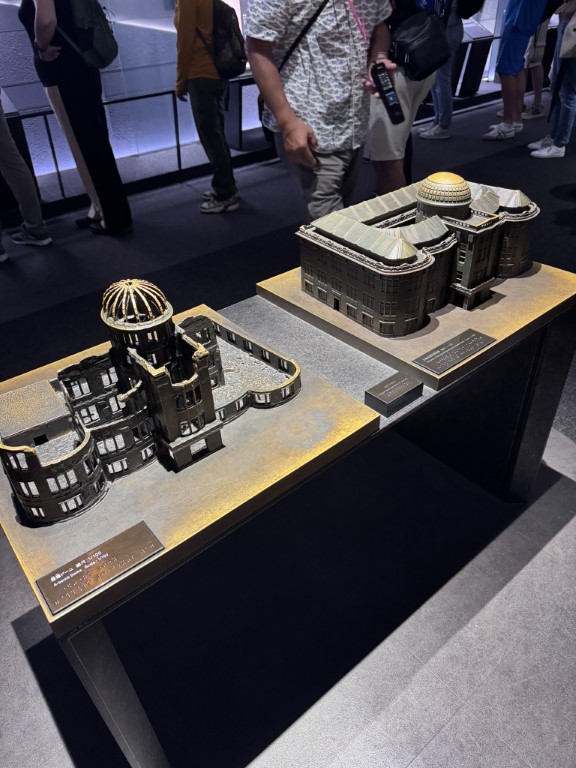
Peace Memorial Park was a short walk from the tram stop. Our first stop was what is now known as the Atomic Bomb Dome. It was originally constructed in 1915 as the Hiroshima Prefectural Commerce Exhibition Hall, made of brick and partially-reinforced steel and adorned with an oval-shaped copper dome. During the bombing on August 6, 1945, the copper roof of the Hall, 160 meters from the hypocenter, melted as the building burned. After the War, the bare steel framework, came to be called the Atomic Bomb Dome. Residents appealed for the preservation of the Dome as a raw example of the destructive power of nuclear weapons.
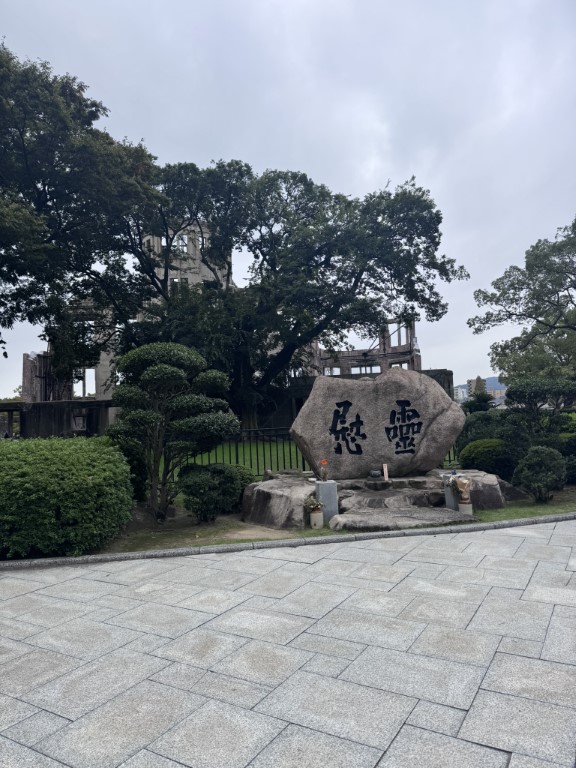
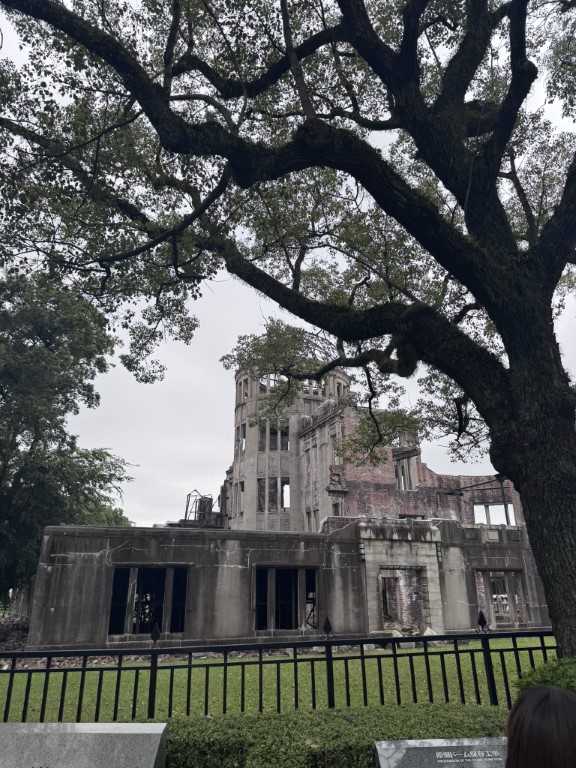
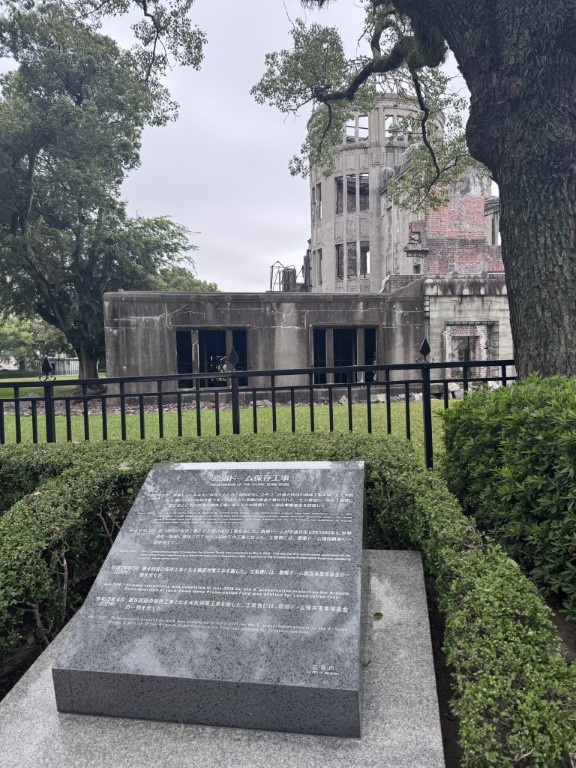
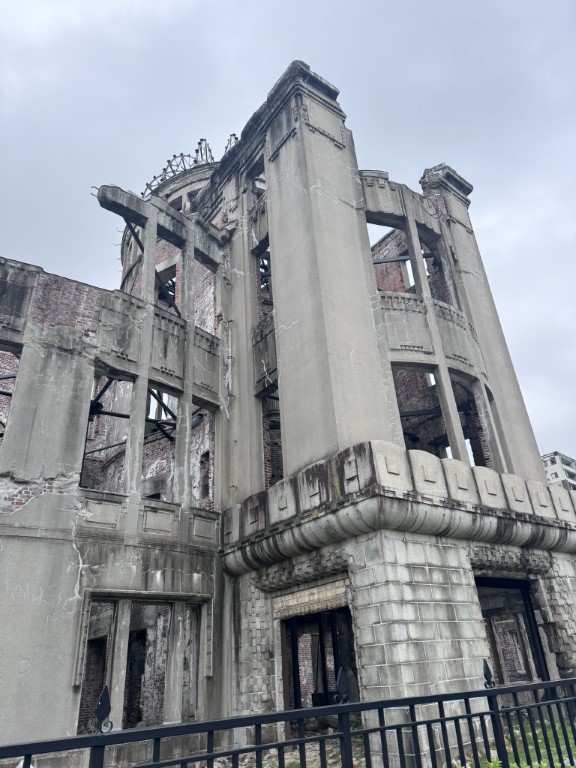
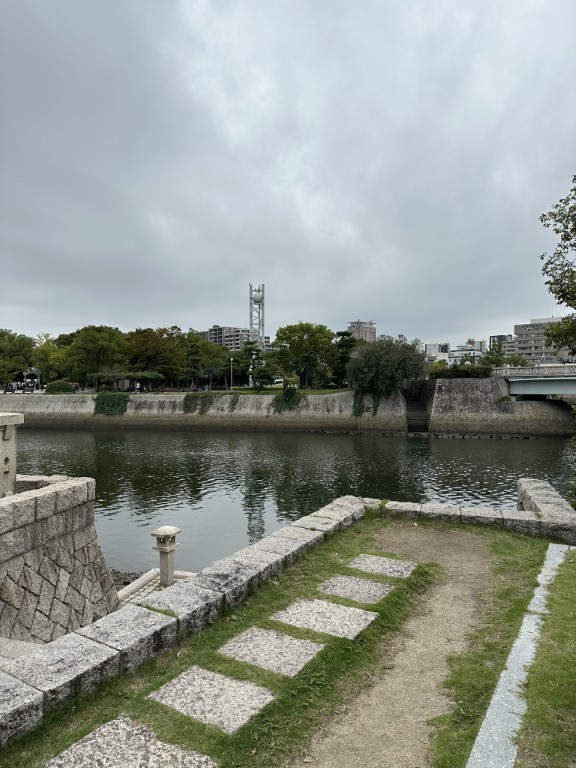
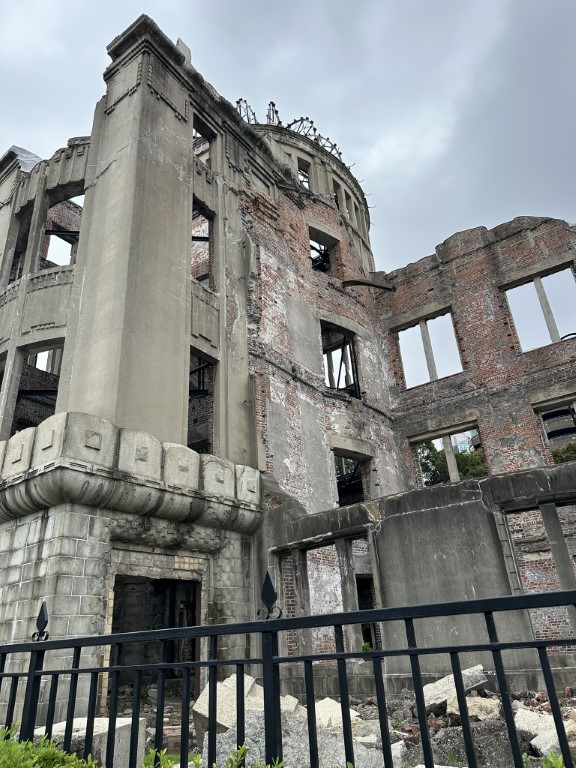
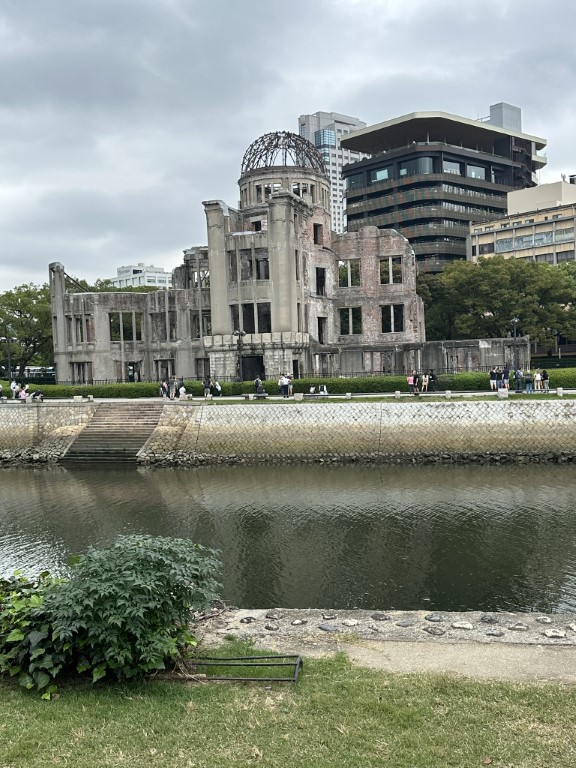
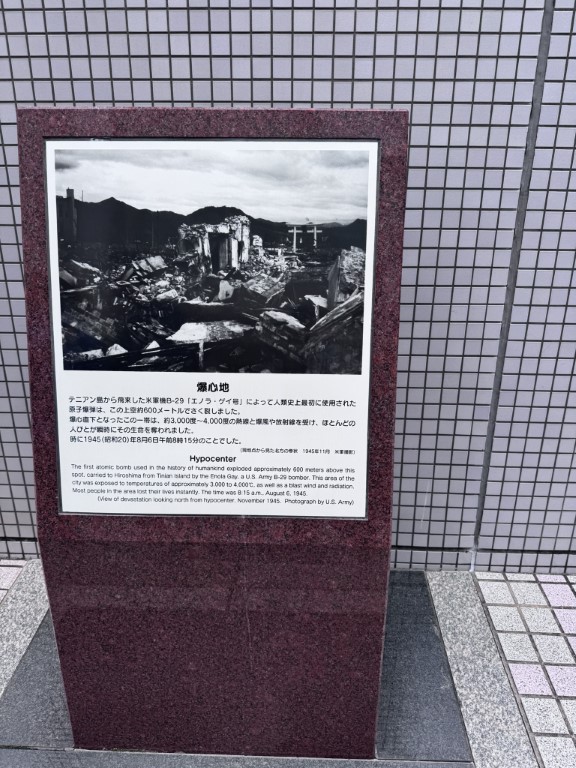
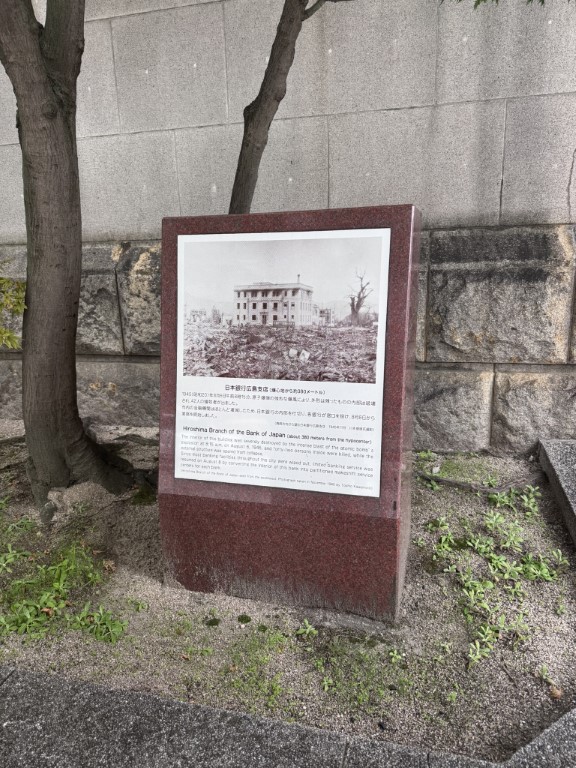
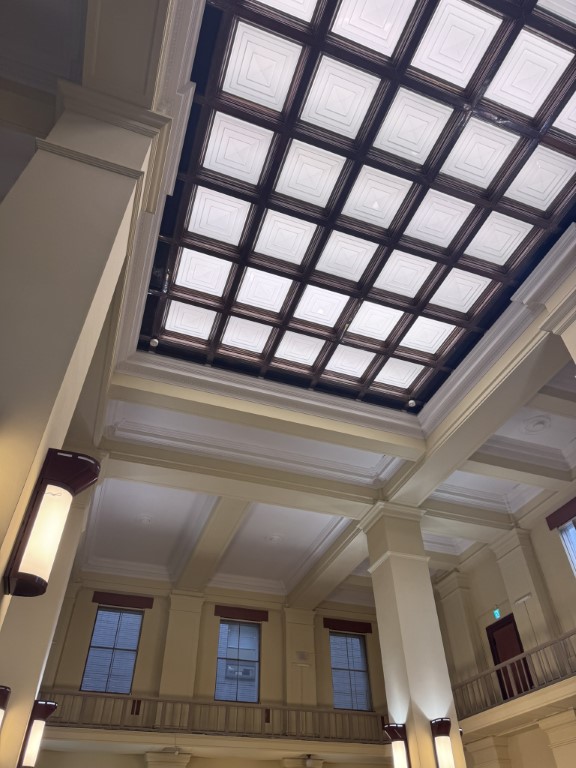
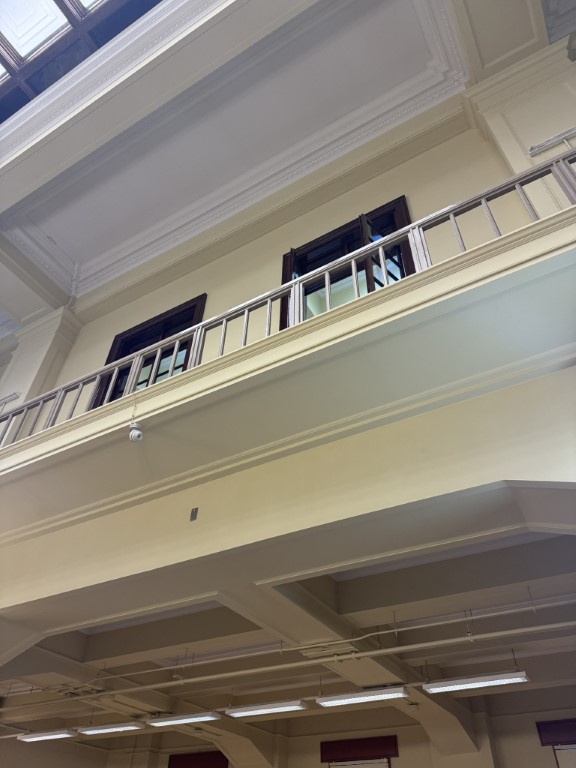
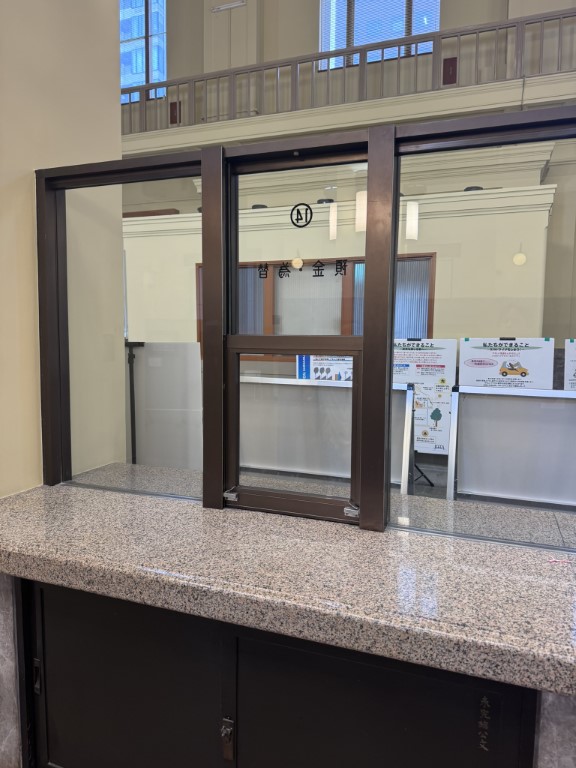
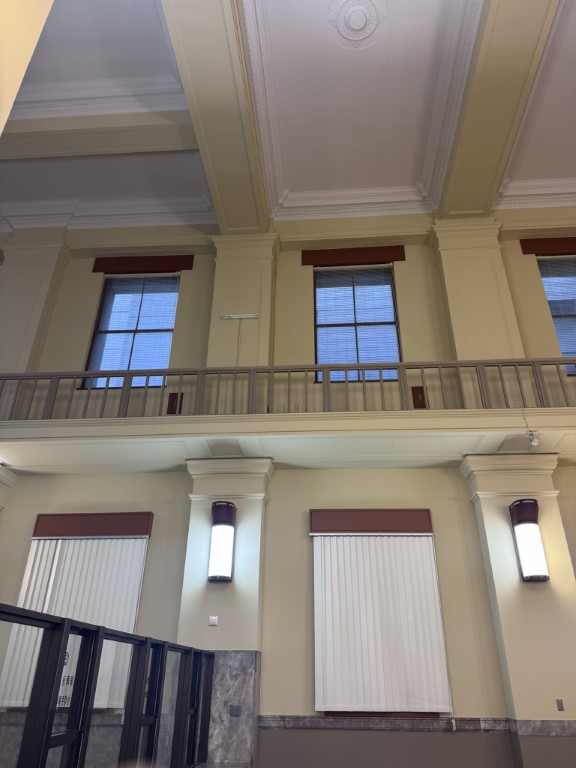
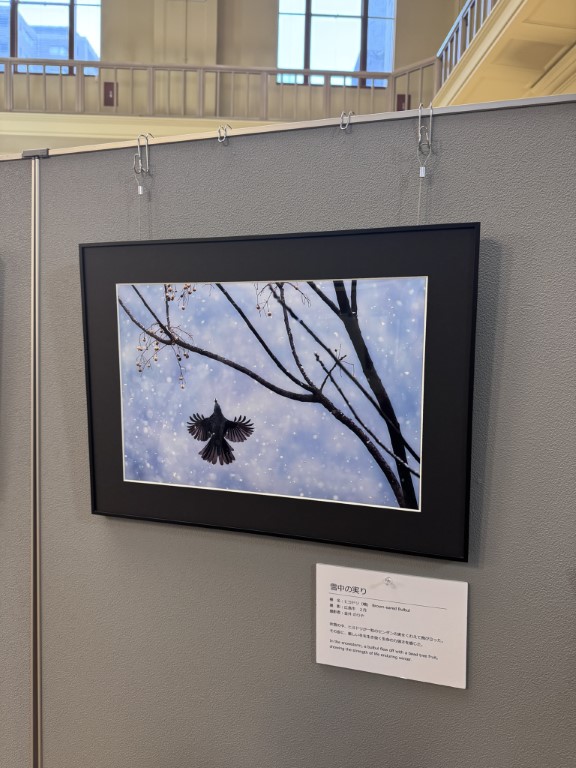
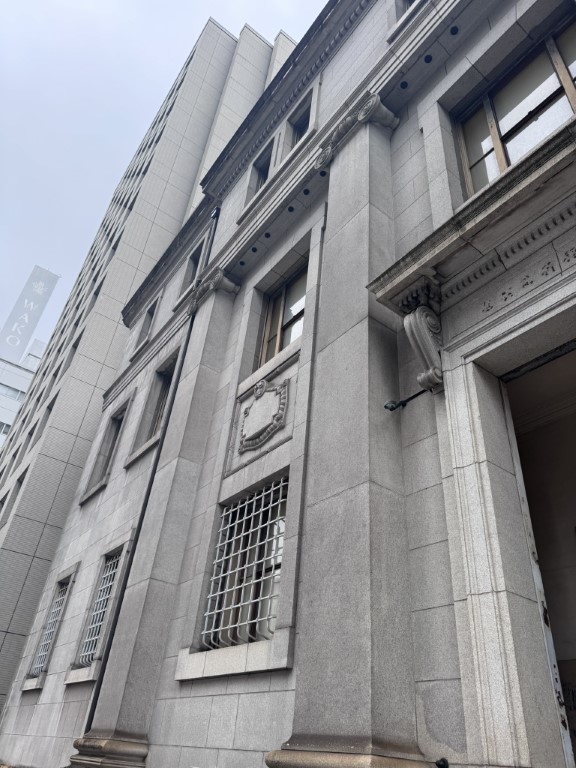
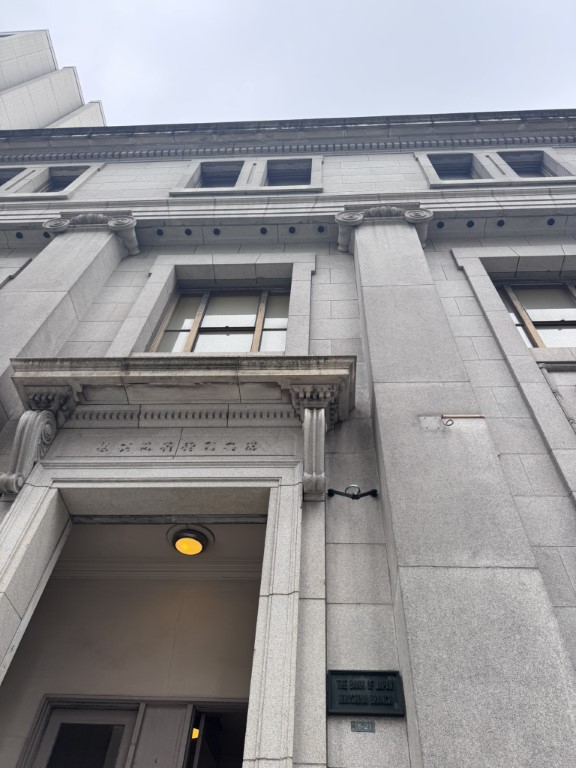
With rain threatening, we altered our walking plan to go to a few sites outside the Peace Memorial Park. The first of these was the Hypocenter monument, which marks the spot where the USAF B-29 bomber, the "Enola Gay" dropped the first atomic bomb to be used in human warfare, which exploded 600 meters in the air above that location. From there, it was a short walk to the Hiroshima Branch of the Bank of Japan. The Branch Office was relocated in 1936 to this location in Fukuro-machi. The building was a classic European design built of steel-reinforced ferro-concrete and equipped with armored shutters on the windows. All 20 people at work inside the building lost their lives on the morning of August 6, the blast gutting the entire top floor where the armored shutters were left open. The shutters on the first and second floor remained closed, saving the interior from complete destruction. Of the remaining hibaku (exposed to radiation) buildings in Hiroshima, it is said to be the most well-preserved. The main floor has been recreated to show how it would have appeared as a bank prior to August 6 and there was a small exhibit space along side showing stunning nature photography.
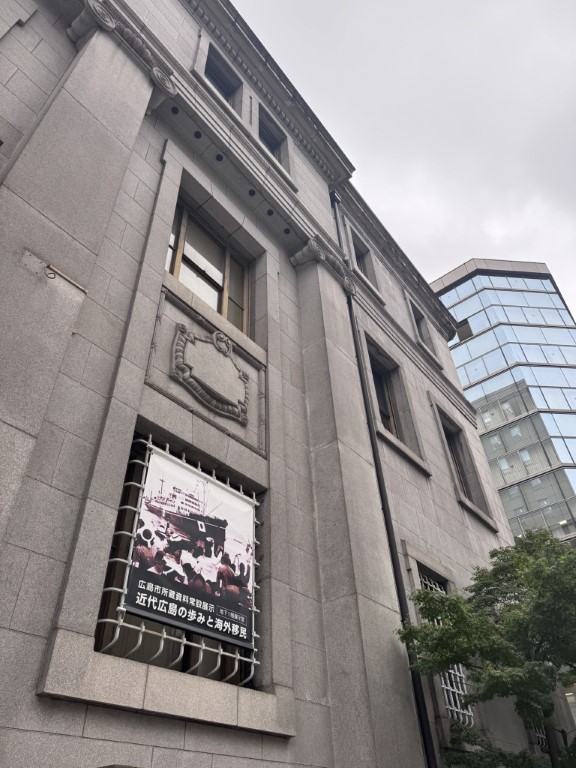
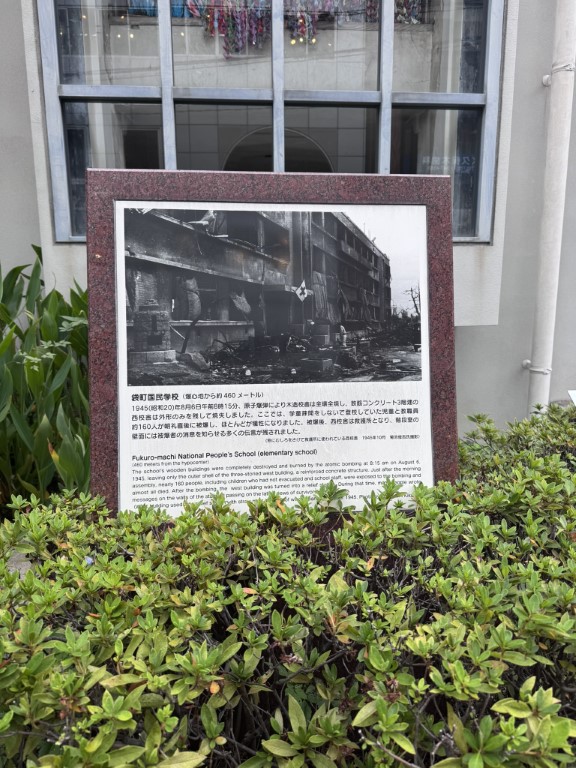
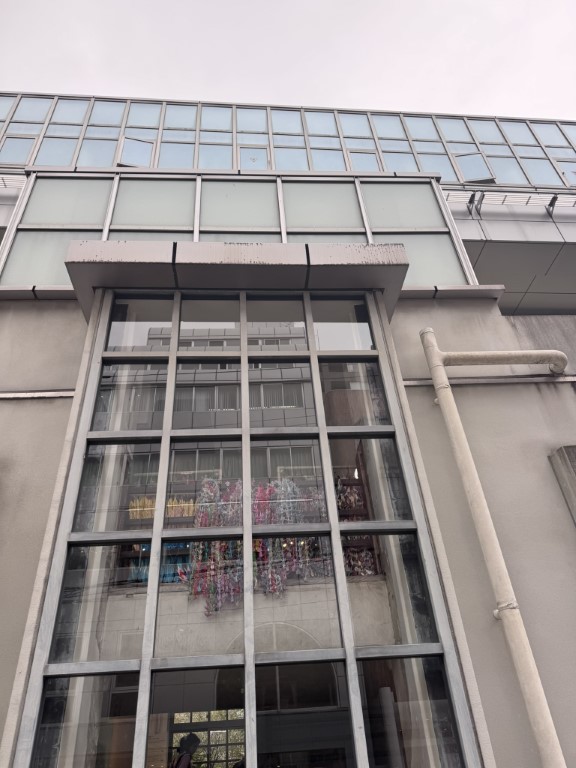
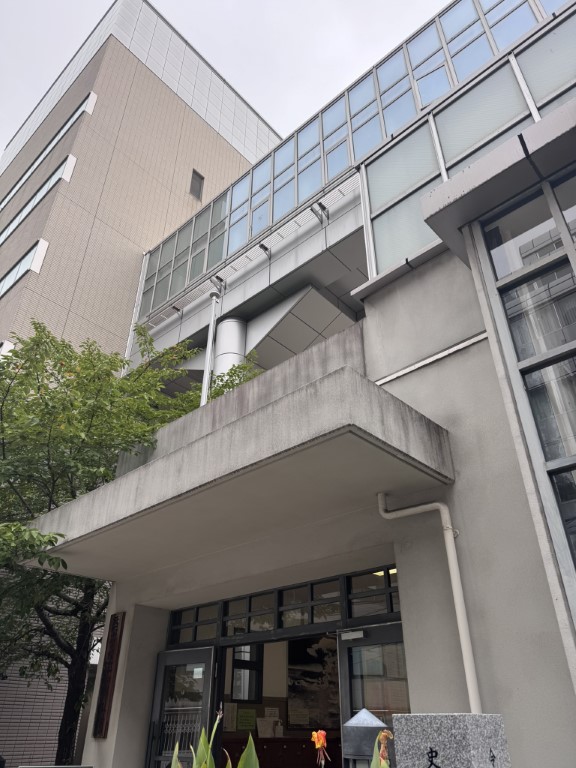
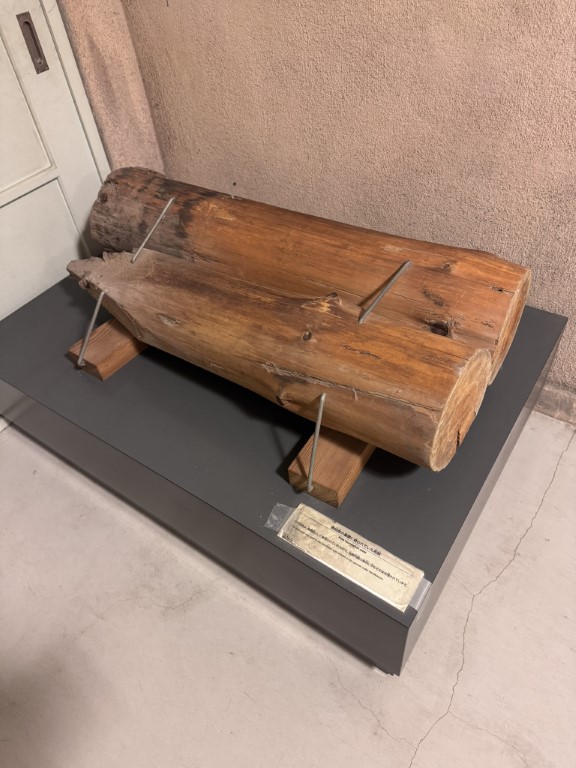
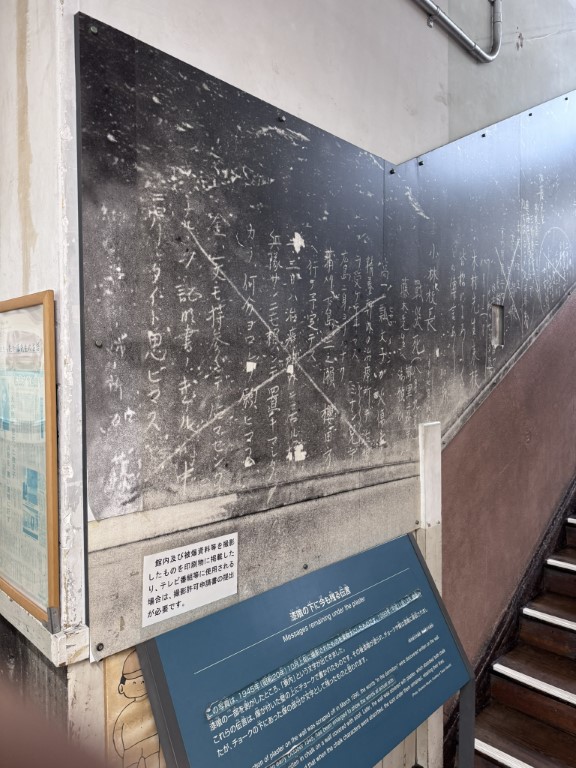
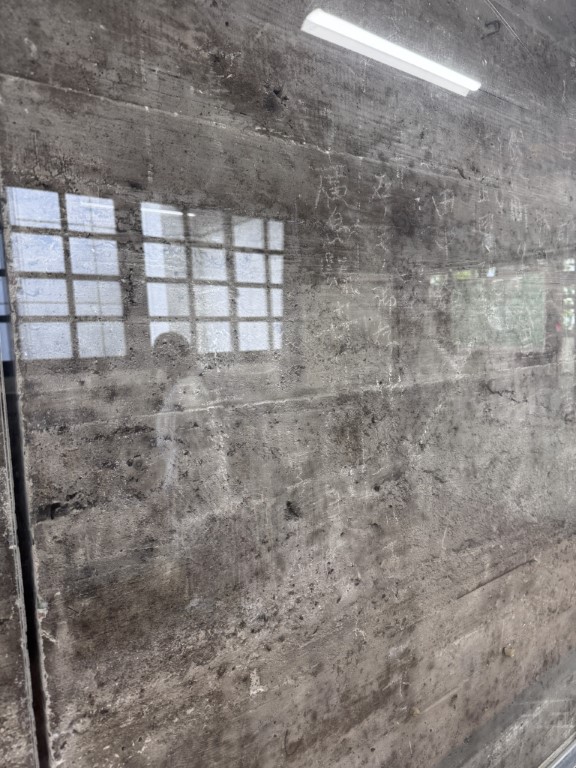
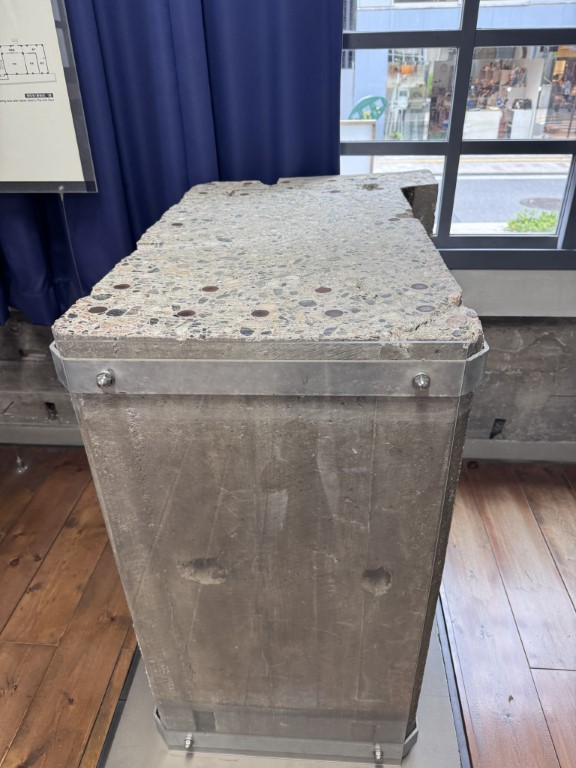
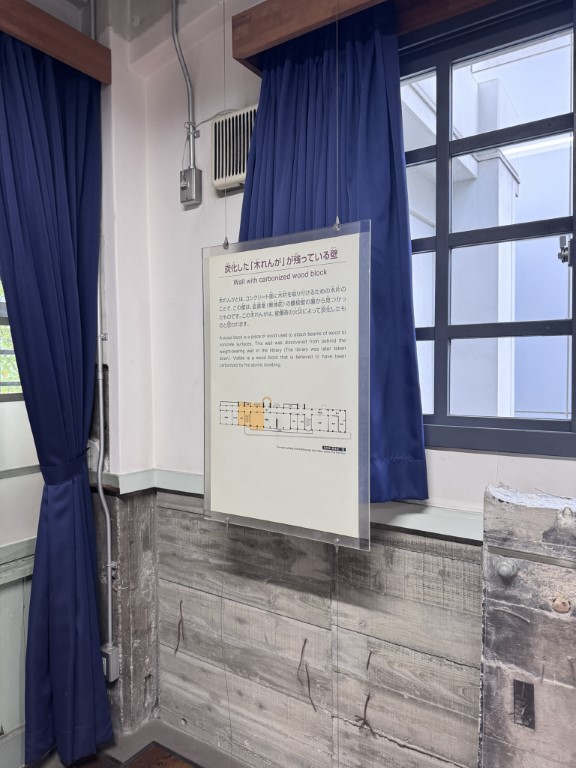
Located just 460 meters from the hypocenter, the Fukuromachi Elementary School was one of the closest to the blast. 160 students and 16 staff members lost their lives as the wooden school buildings were instantly reduced to splinters and devoured by flame. The death toll would have been larger but many students had already been evacuated to countryside schools in the months prior due to Allied air raids. Following the bombing, the remains of the school were used as a shelter and hospital for victims. The school was slated for demolition in 2000 but during demolition, messages written on the walls by survivors (hibaku dengon) were discovered and a museum opened in 2002 to preserve and display these messages as well as other artifacts from the bombing.
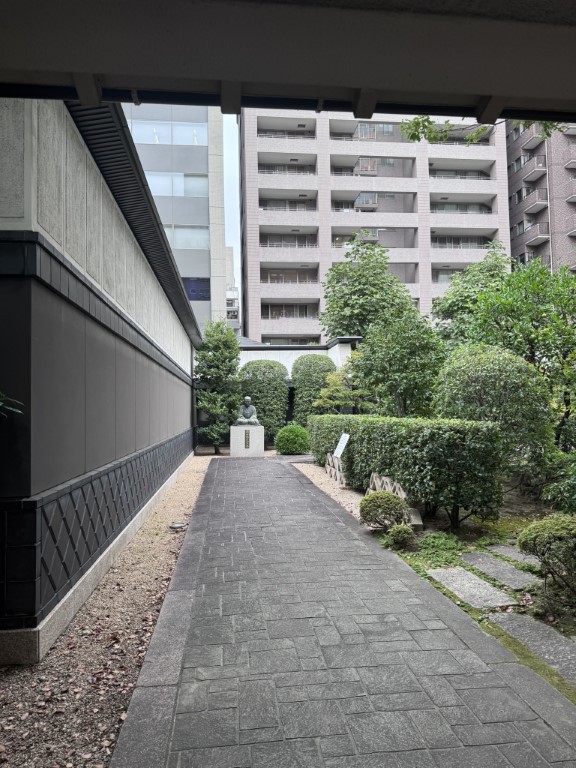
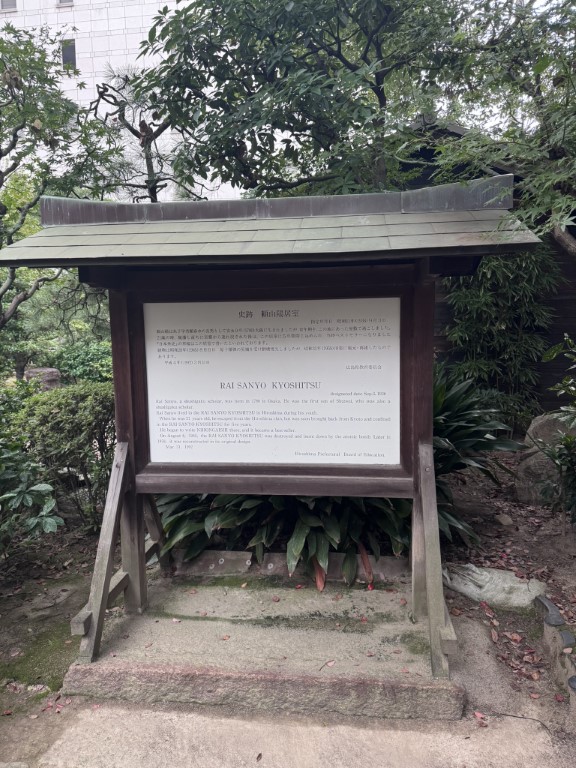
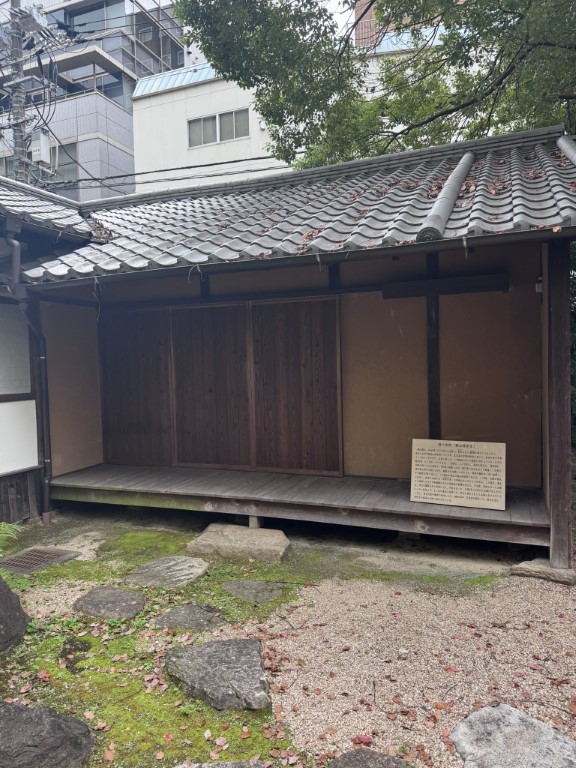
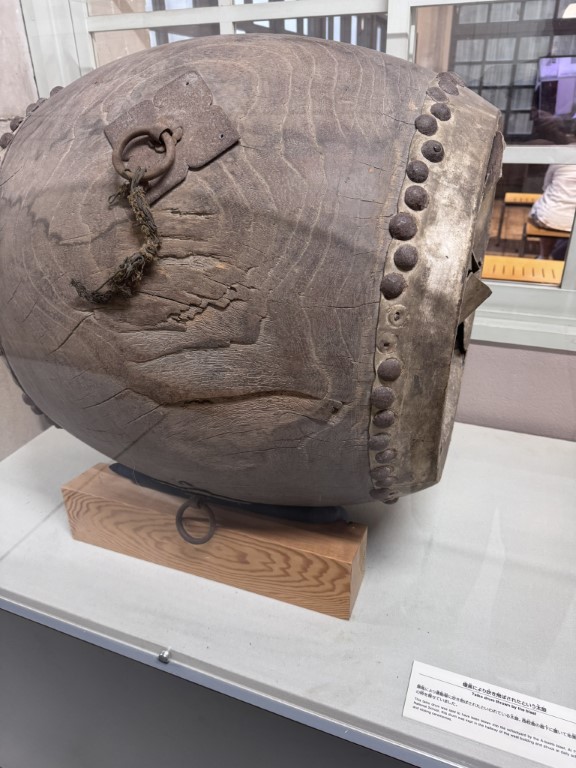
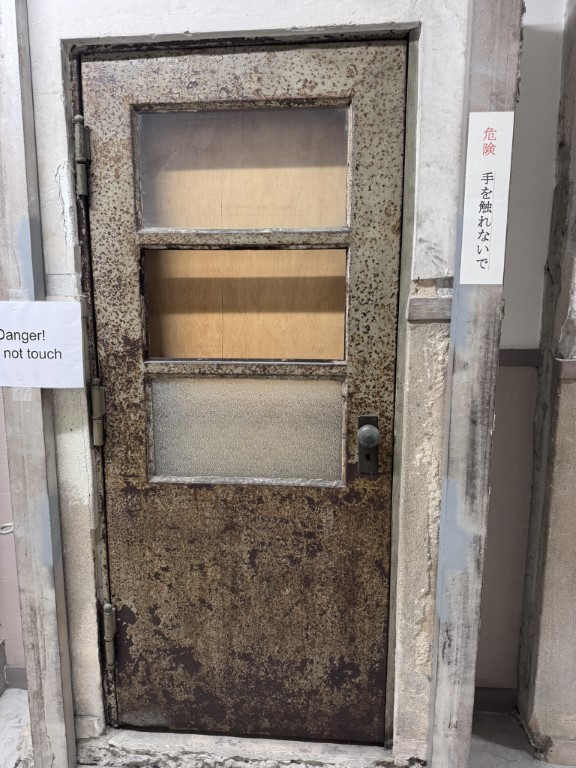
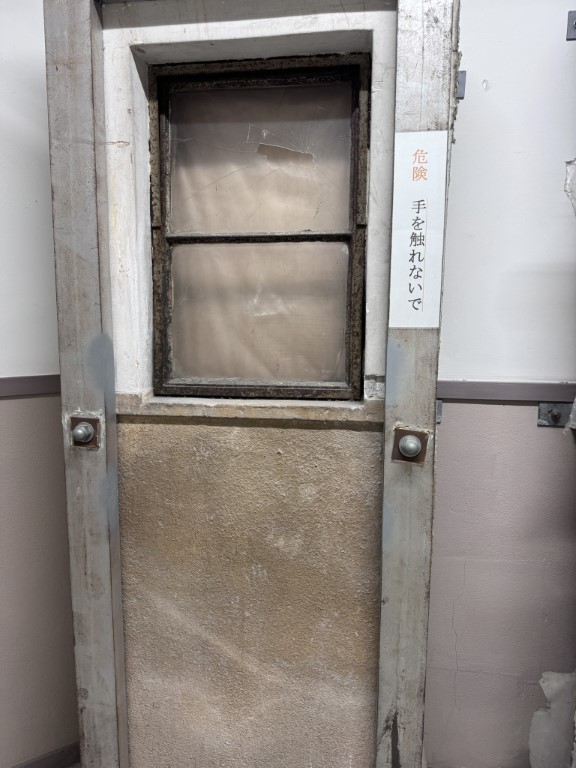
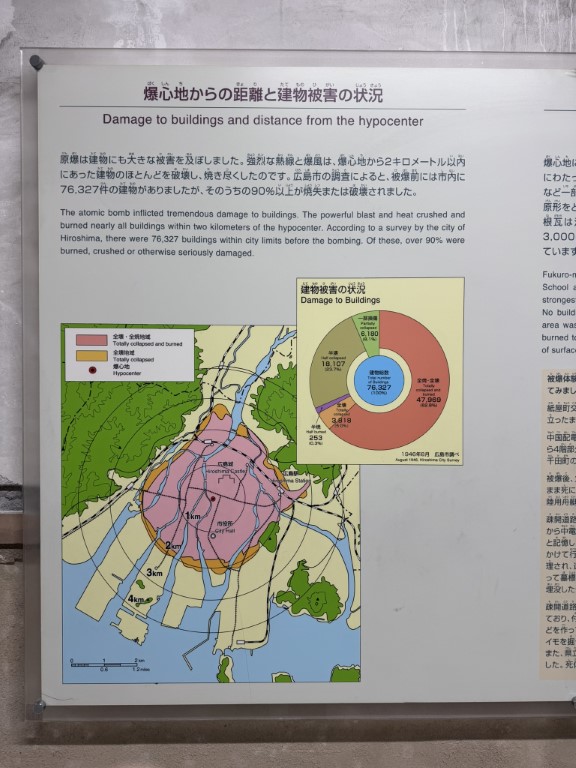
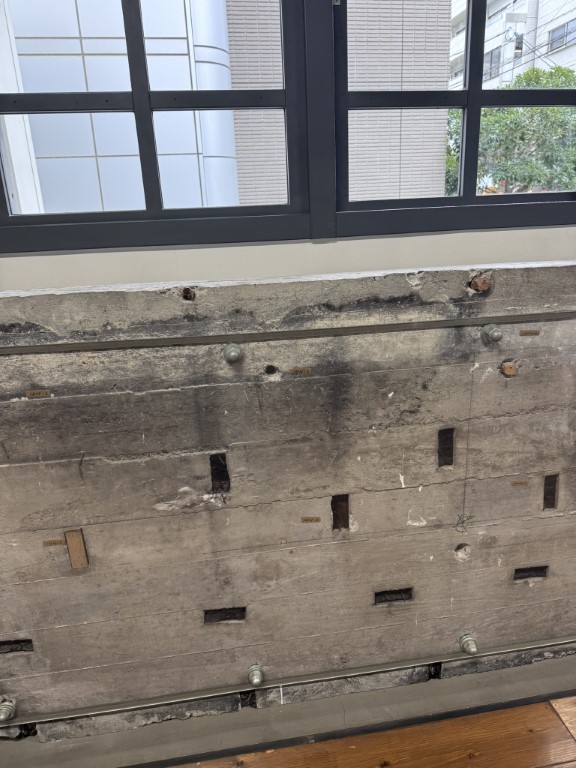
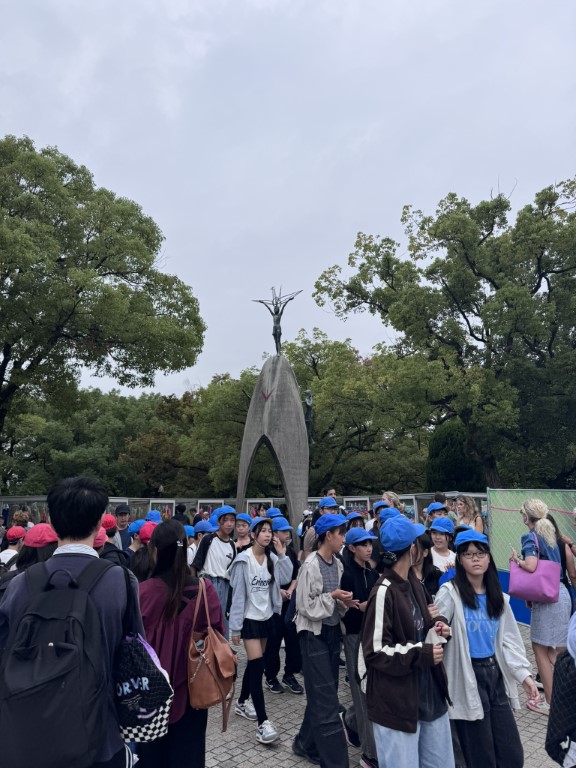
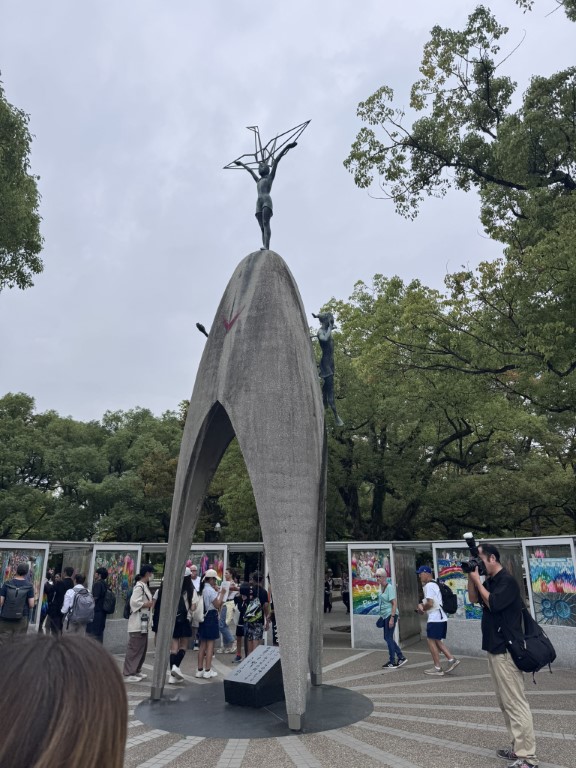
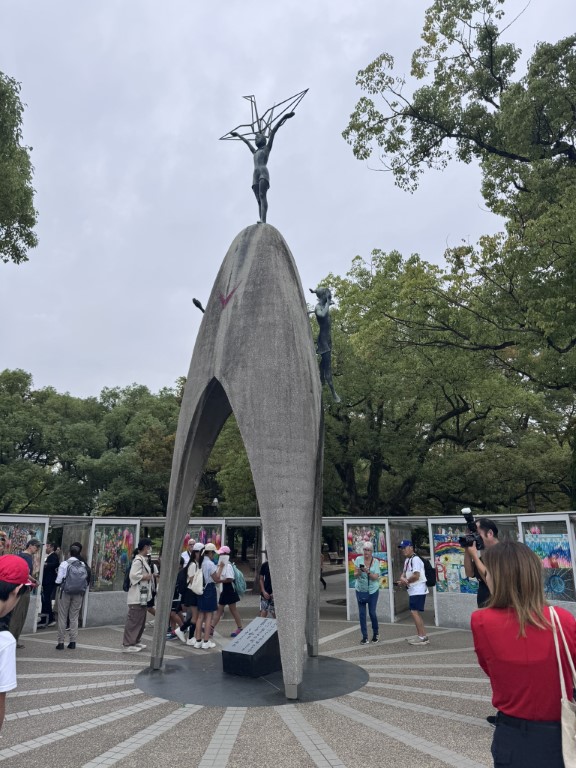
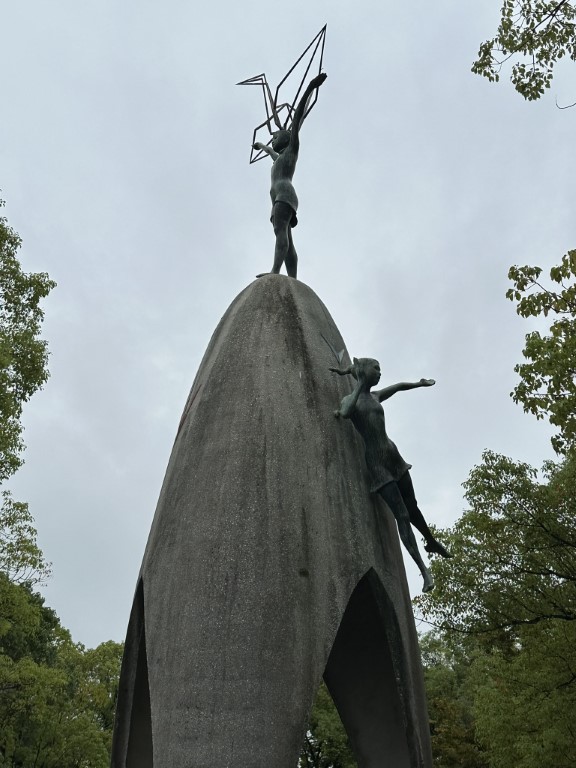
We walked back to the park next after a quick stop at 7-Eleven for some sodas and snacks, where J. R. learned his debit card was damaged and could not be read by the machines. Janie had not brought hers, so we ended up having to do a cash advance on our credit card to get some Japanese yen. We bought a couple of protein bars, which turned out to be chalky and tasteless, but we needed a little food. Back at Peace Memorial Park, we stopped at the Children's Peace Monument, which was inspired by the story of Sadako Sasaki who was exposed to the bomb at age 2, developed leukemia and died at 12. The stone, dome-shaped monument is nine meters high, topped with a bronze statue of a girl lifting a golden paper crane. The dome features statues of a boy and girl, symbolizing a bright future and hope. Inscribed on the dome is "This is our cry. This is our prayer. Build peace in the world."
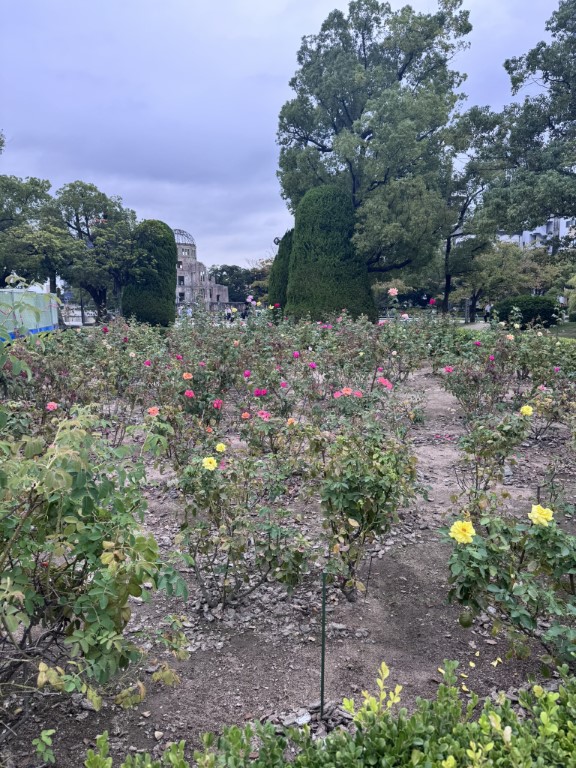
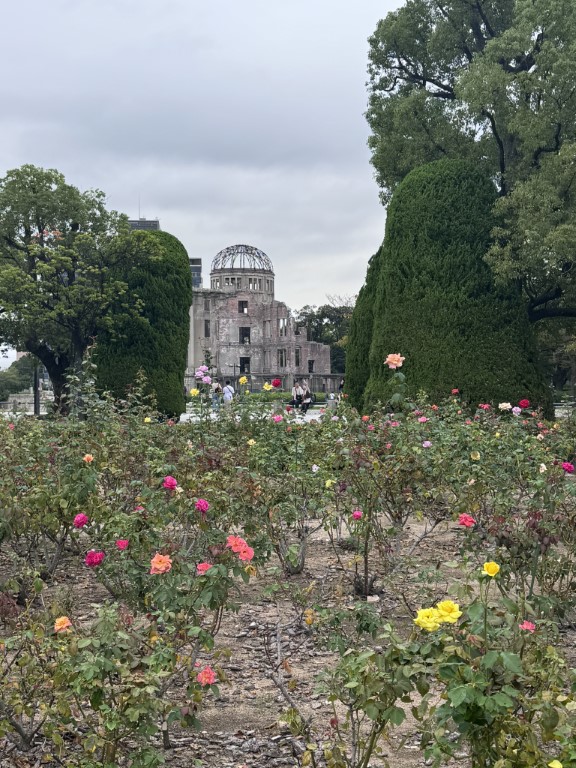
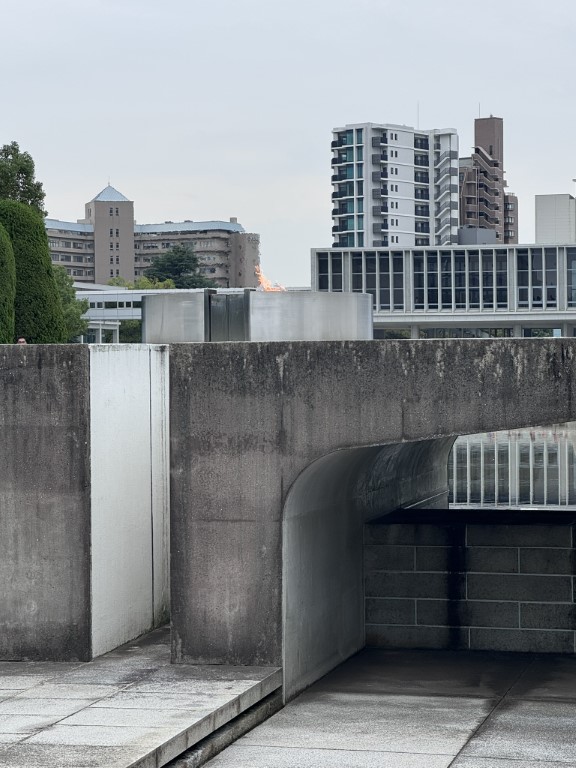
We passed the Flame of Peace as we continued through the park. The base of the sculpture represents two wrists joined together, and two wings on either side represent palms facing upwards to the sky. It was designed both to console the souls of the thousands who died begging for water and to express the hopes for the abolition of nuclear weapons and the realization of lasting world peace. The flame at the top was lit on August 1, 1964, and has been burning ever since in protest of nuclear weapons, and will continue to burn until there are no nuclear weapons left on earth.
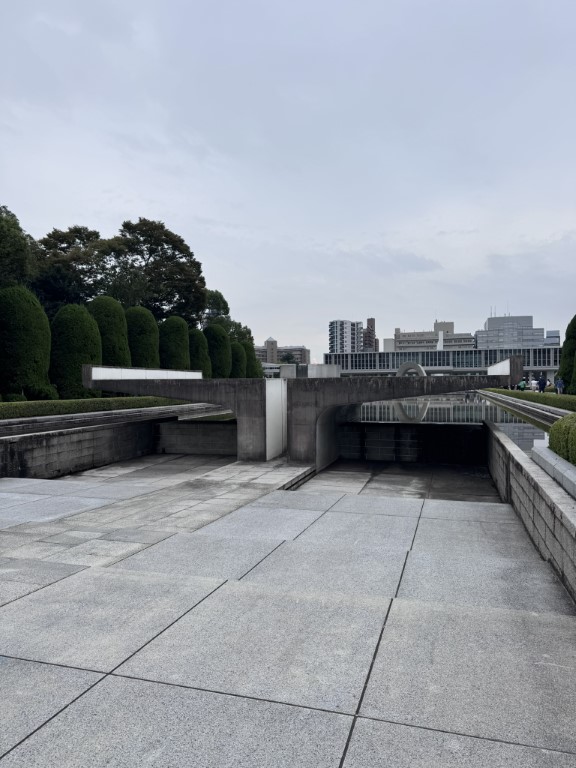
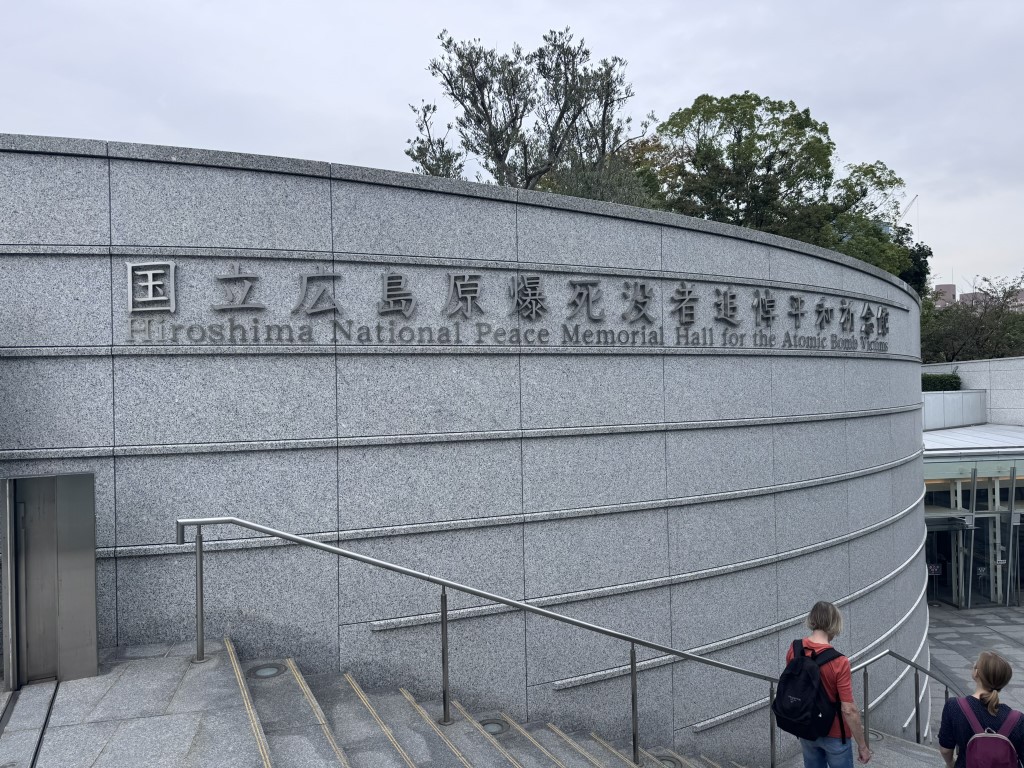
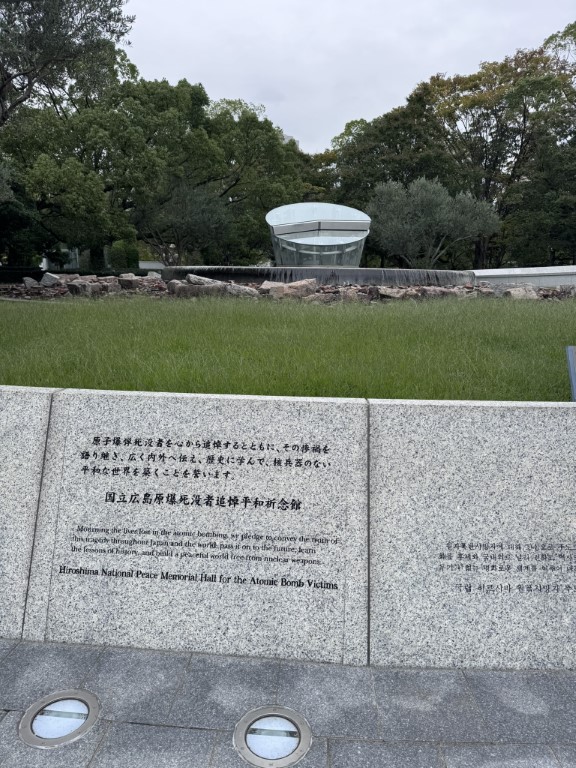
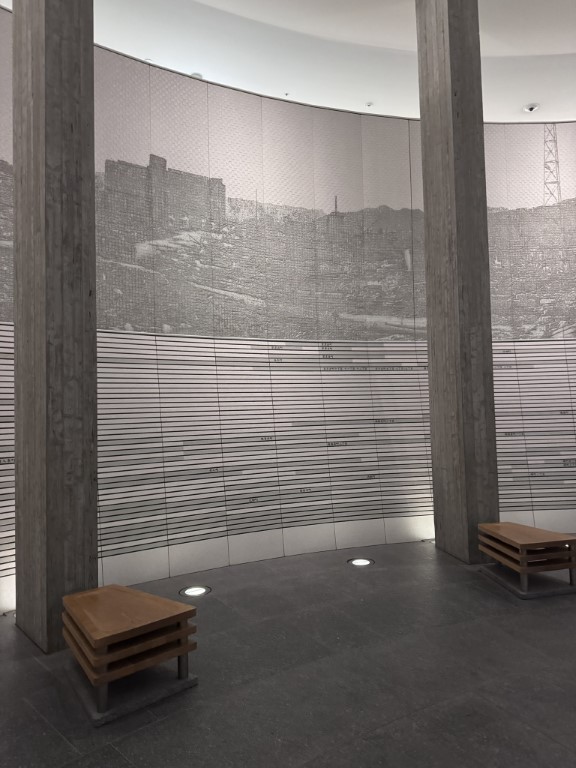
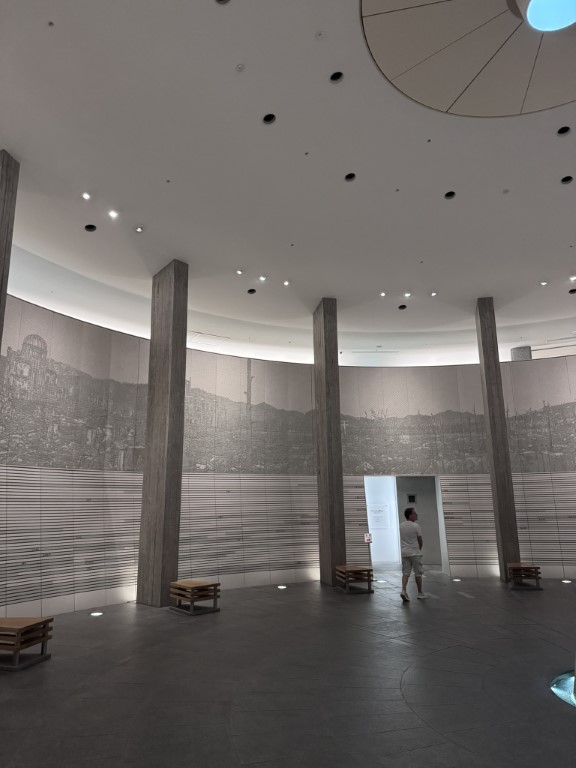
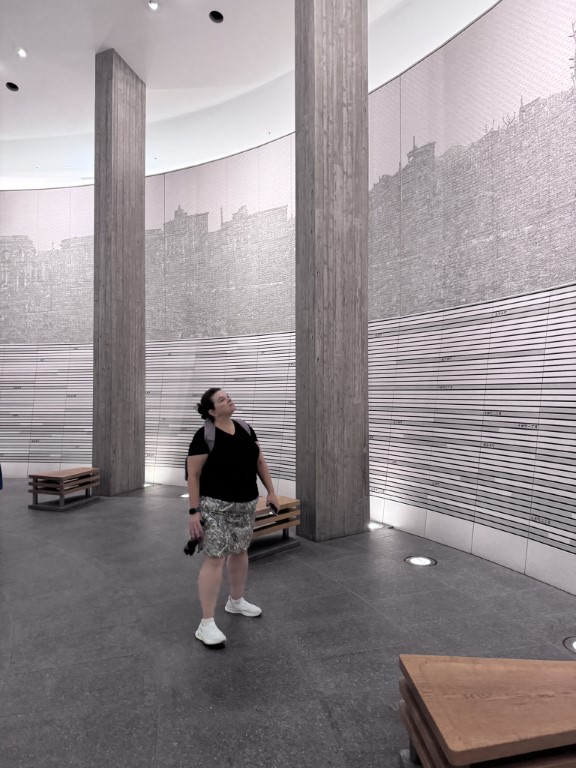
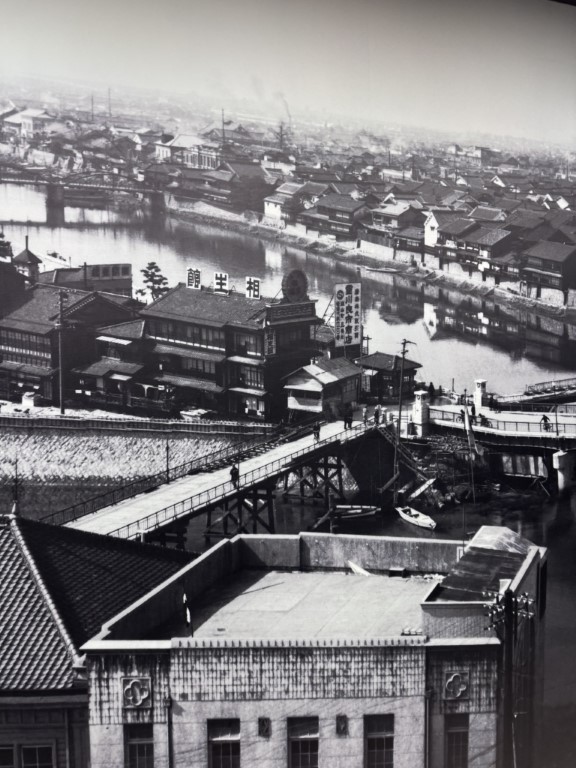
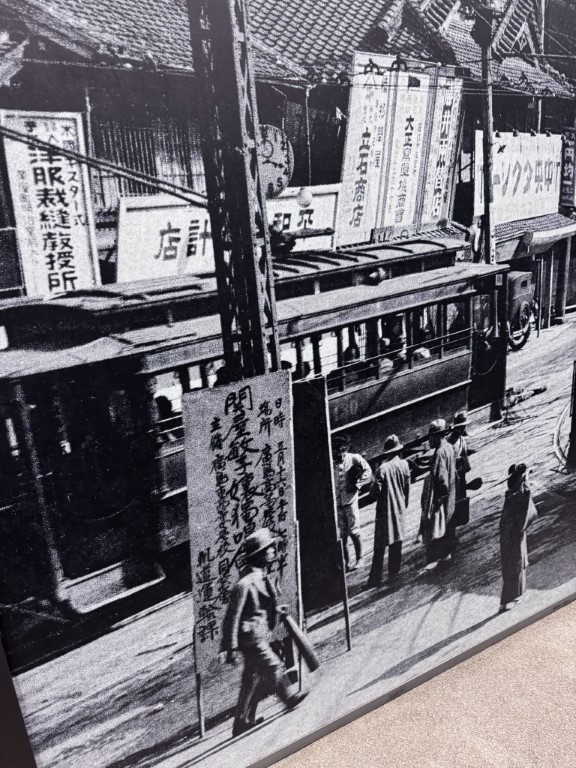
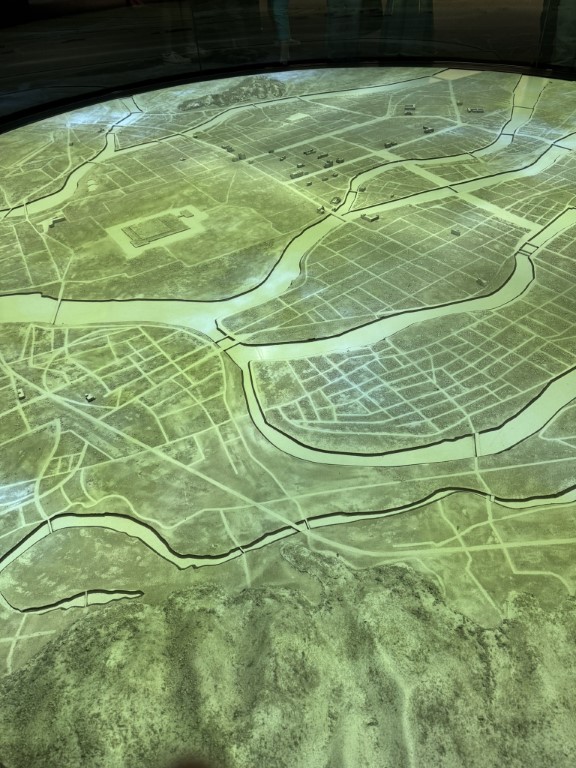
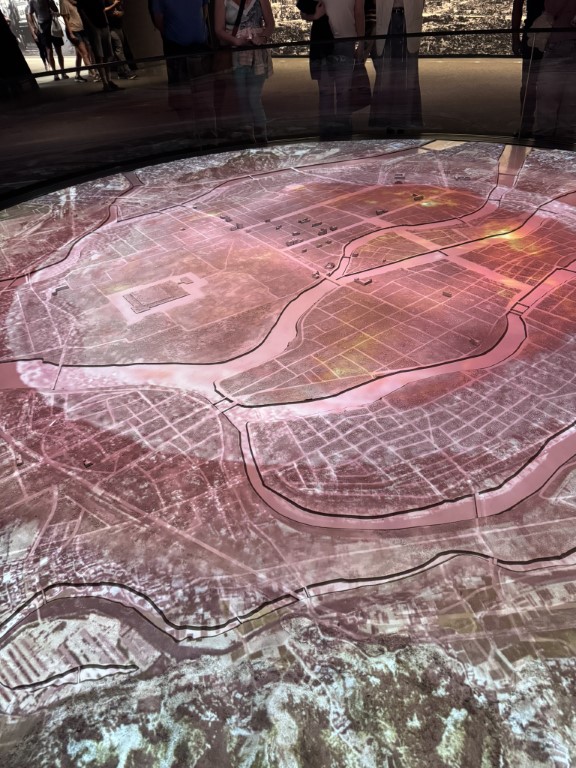
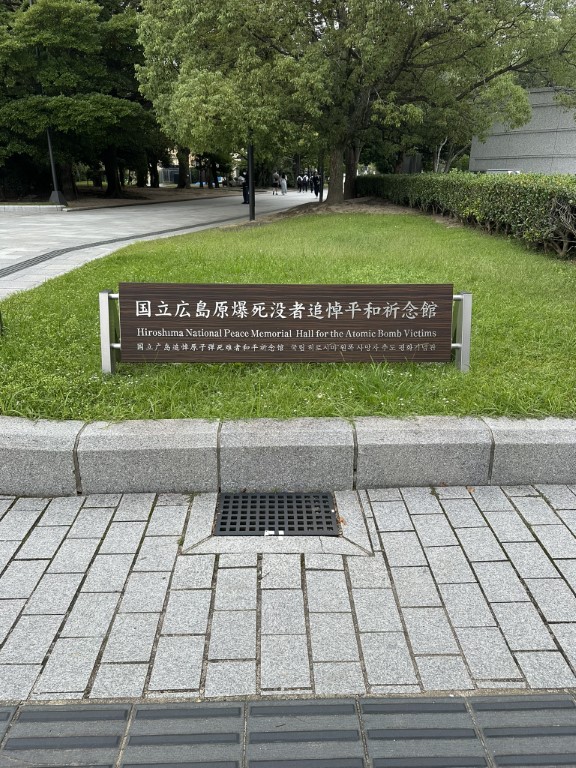
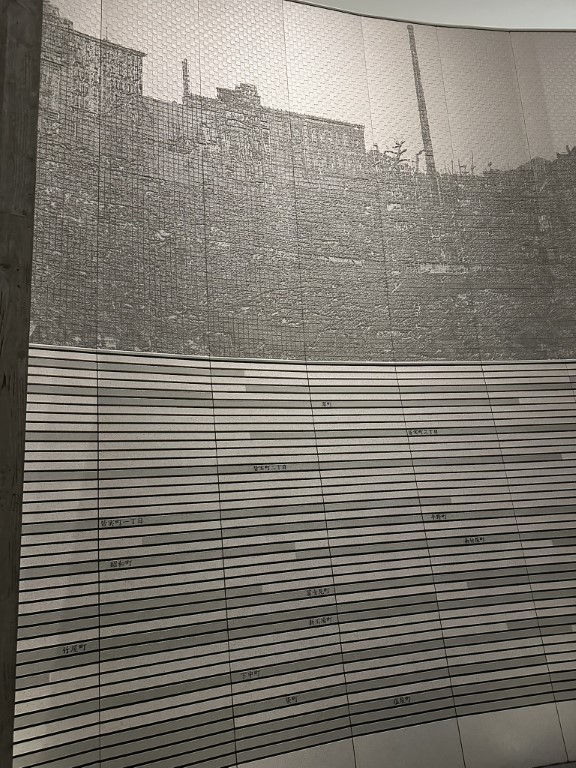
The Hall is dedicated to keeping a record of those who perished with its 360 degree panoramic view of the city after the bombing. There is a display of names and photos of those who died to give a sense of how many perished. The images of the Hiroshima prior to the bombing and the destruction immediately afterwards were quite moving and we were impressed with the commentary which did not place blame, but included statements such as "after the Japanese started the War" and "due to poor political decisions by the Japanese government that led to bombings of the island". The Hall focused on the atrocities of war and the hope that nuclear weapons will never be used again.
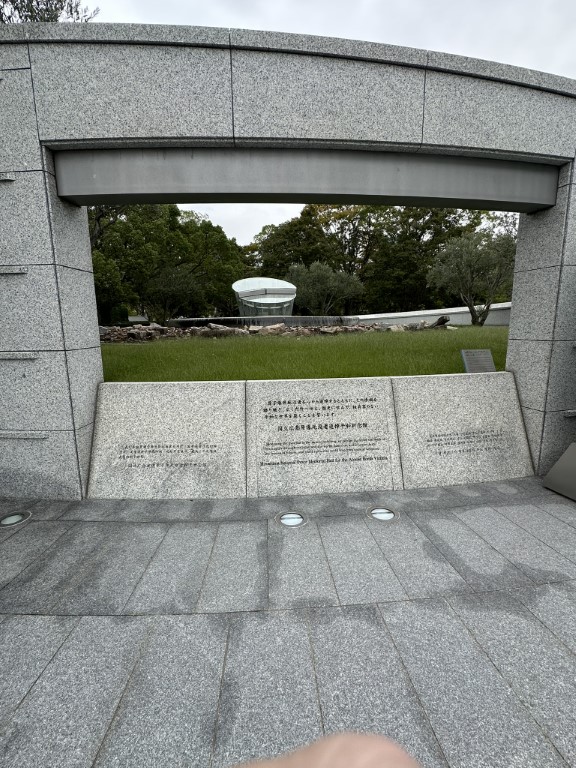
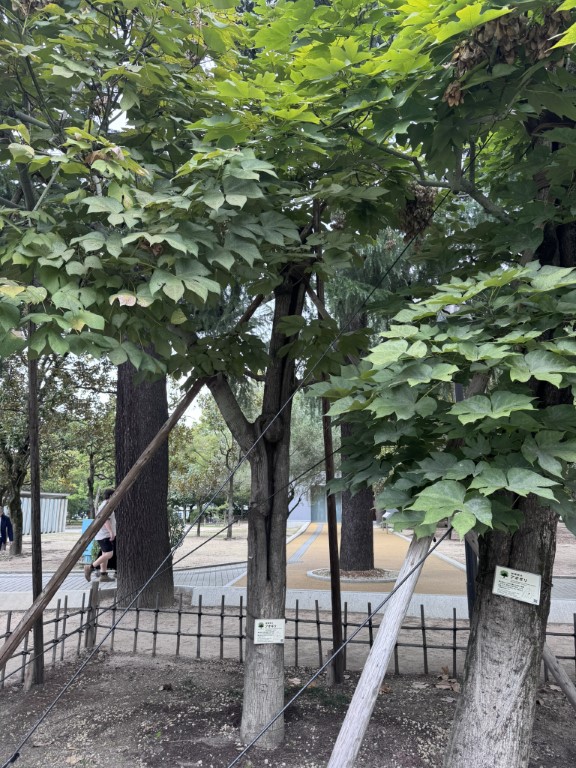
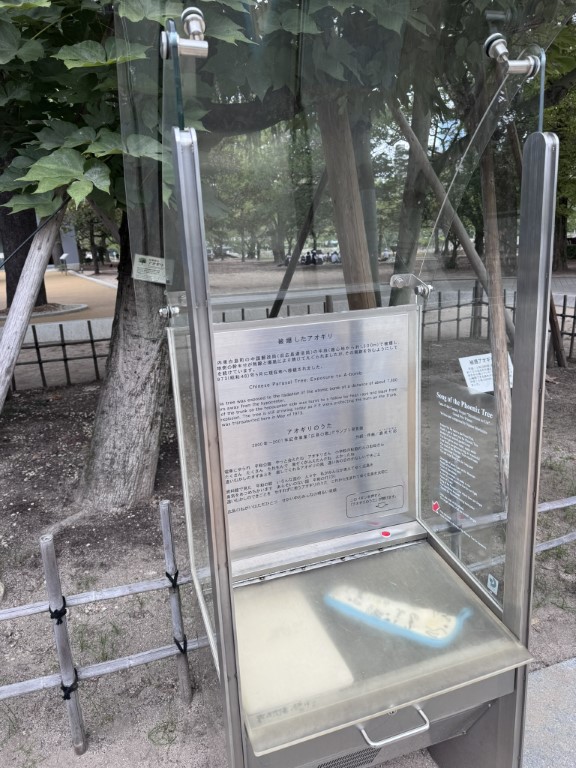
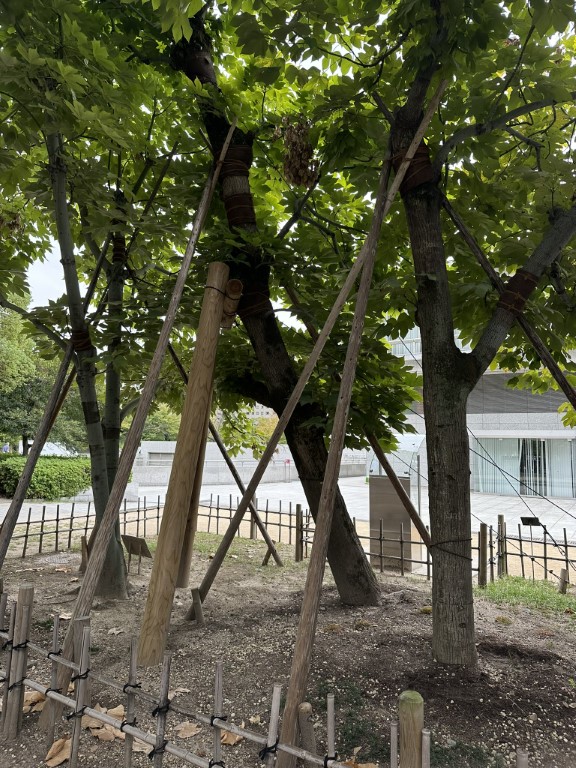
We walked through the rest of the park to see the A-bombed Phoenix Trees, which stood about 1.3 km from the hypocenter and took the full force of the heat rays, losing their branches and leaves and the trunks were hollowed out. Although the trees appeared dead, they budded the following spring. When the area was rebuilt, they were transplanted in 1973. They remain alive, witness to the damage brought by the bombing and they continued to put out seeds. We visited the Hiroshima Peace Memorial Museum, which was a disappointment because they allowed too many people in at one time so it was impossible to see most of the exhibits and we were either herded through or had to wait a long time to get around people. They should go to a timed ticket system like other museums.
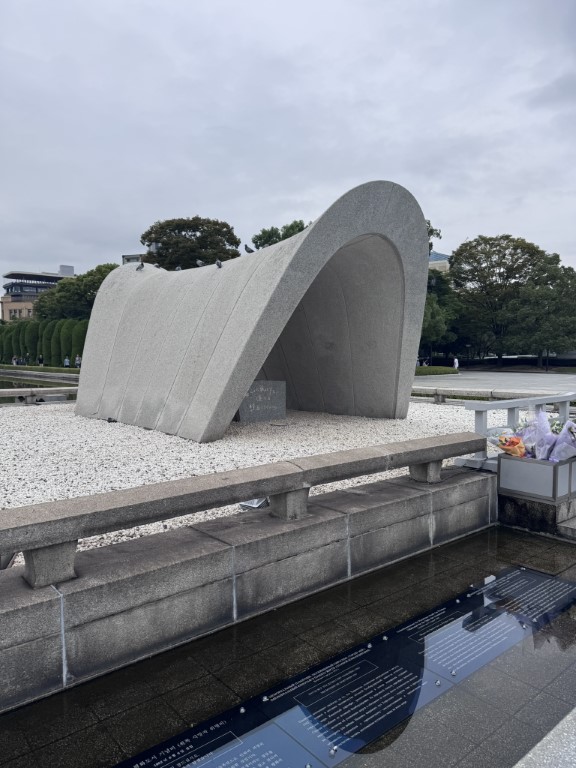
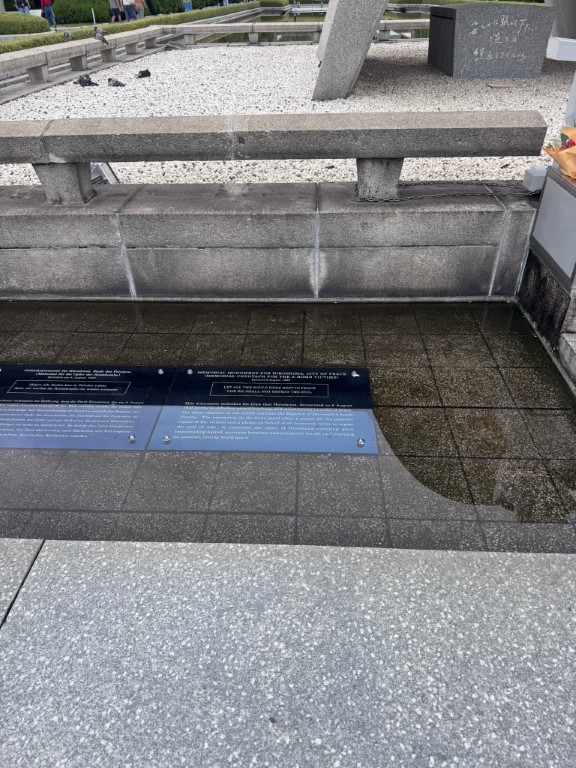
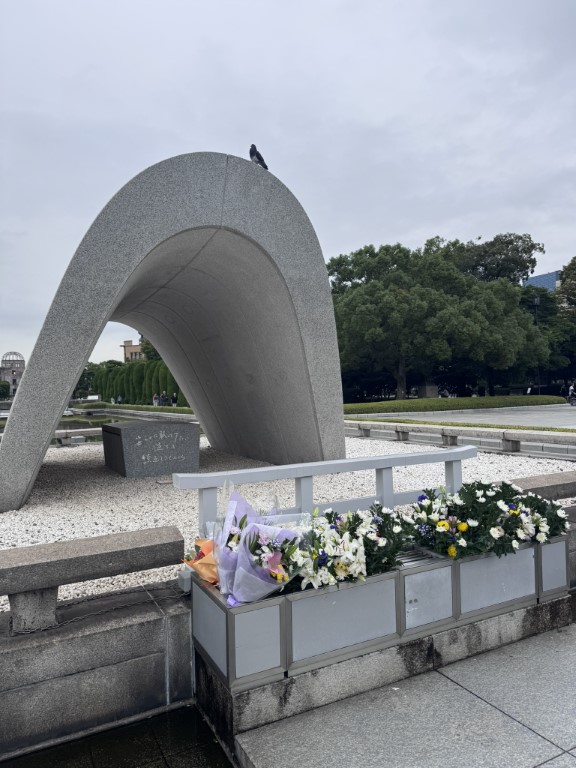
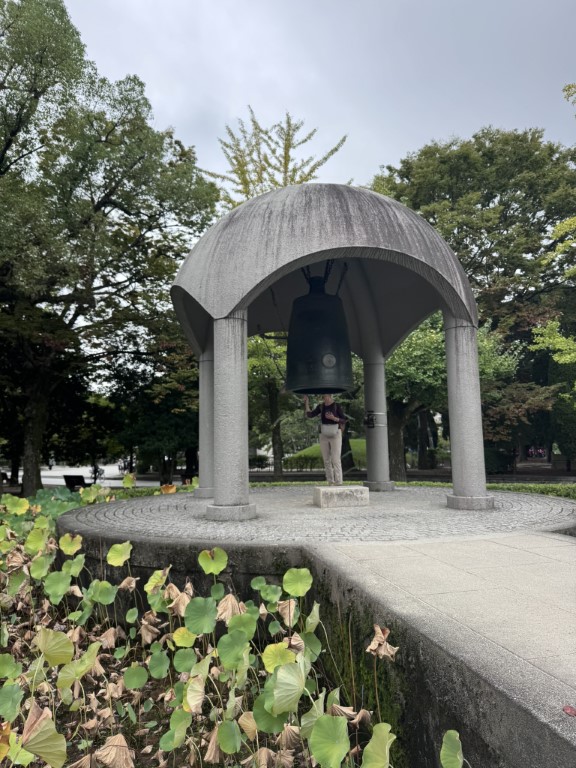
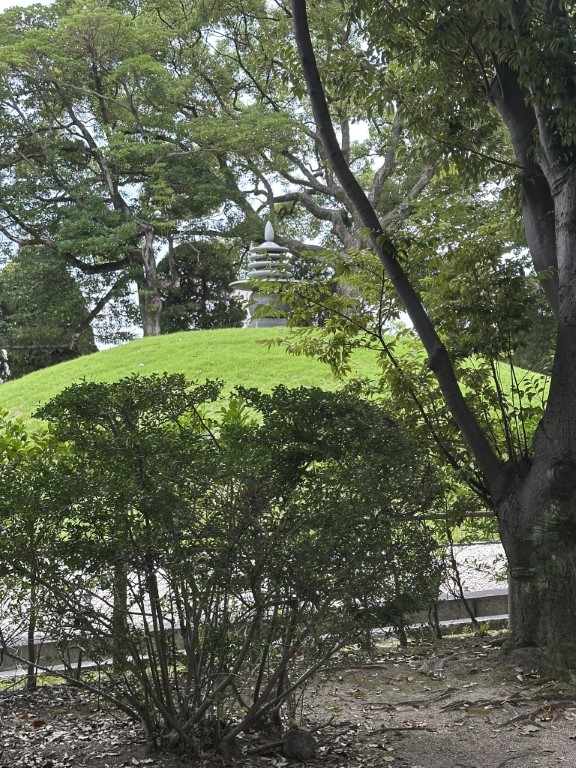
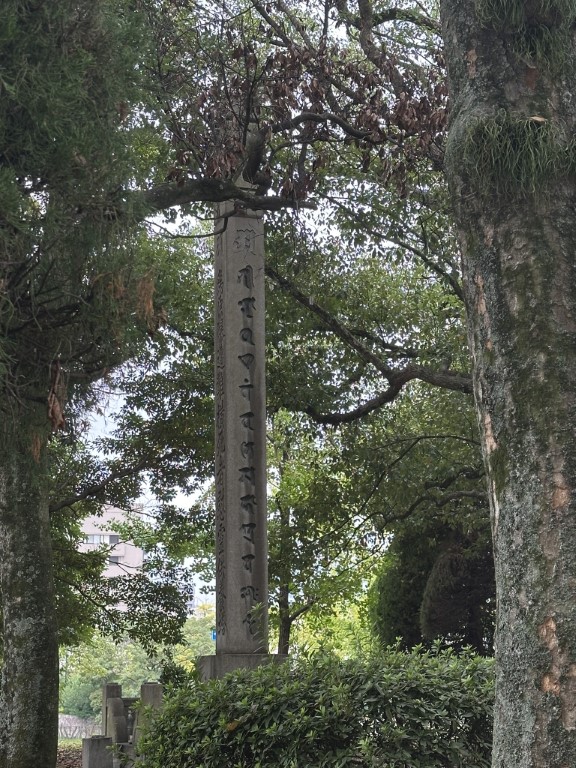
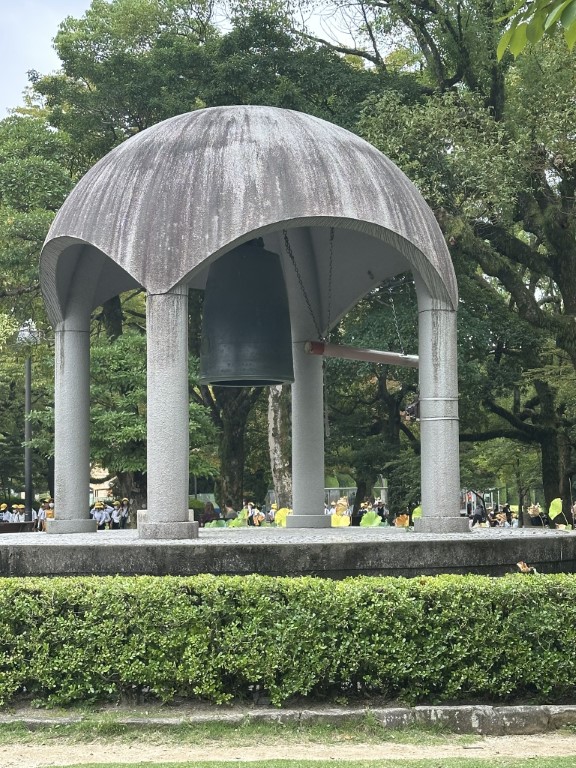
On our way back to the tram stop, we stopped at the Atomic Bomb Memorial Burial Mound. After the bombing, bodies of victims were laid here and cremated. In 1946, a memorial was created with an ikotsu-do (vault where ashes of the deceased are kept), and chapel. The ikotsu-do contains unclaimed ashes of 70,000 people. We also saw the Bell of Peace, another symbol of the movement against nuclear weapons. The bell features engravings such as a map of the world without borders and features the atomic energy symbol on the tsuki-za (striking panel) to symbolize the desire to strike out nuclear weapons. On the other side is a mirror to reflect the hearts of all who sound the bell. Around it is a pond of Oga Lotus flowers, planted in prayer for those who lost their lives.
We couldn't find the Nose of Jisenji Temple and decided to skip the Honkawa Elementary School Peace Museum having seen the other elementary school museum earlier in the day.
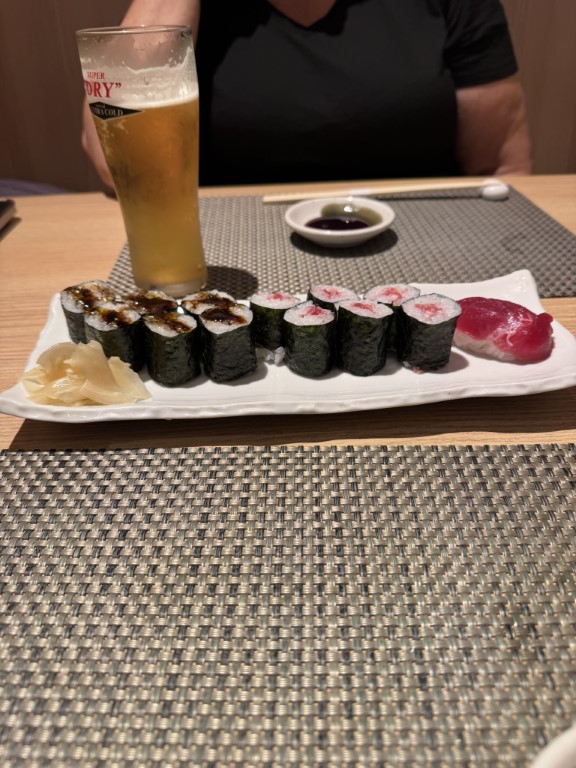
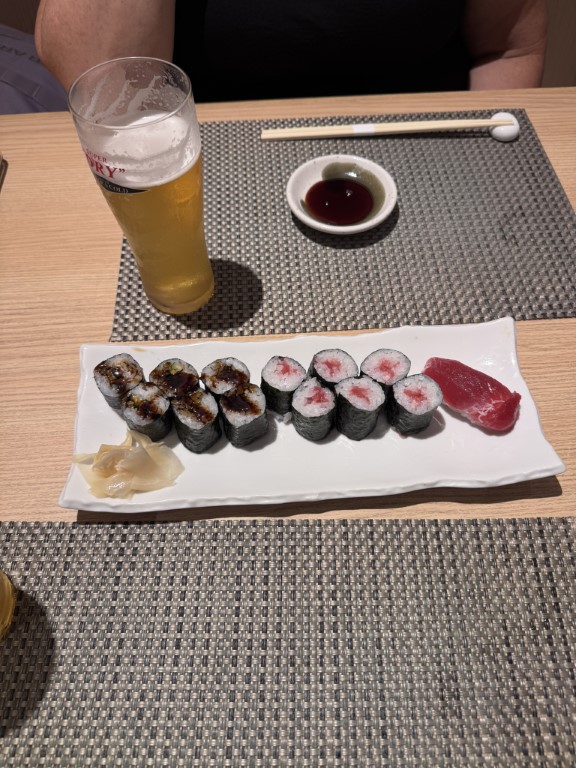
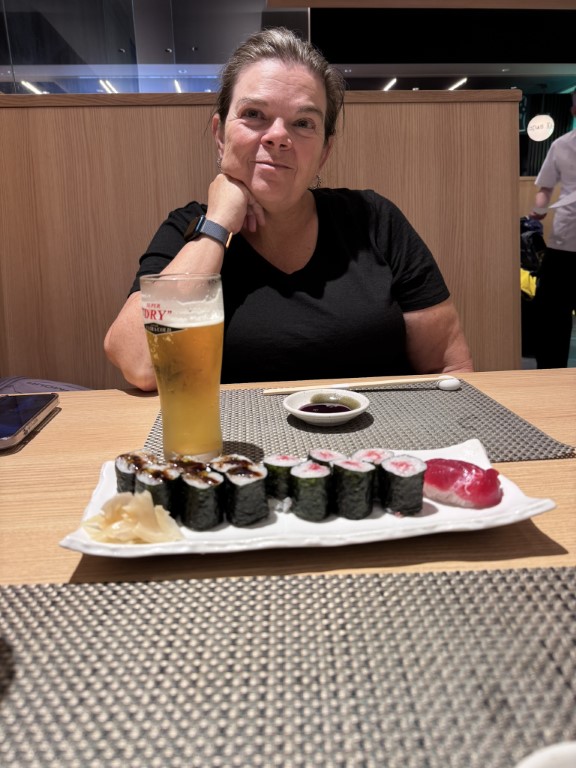
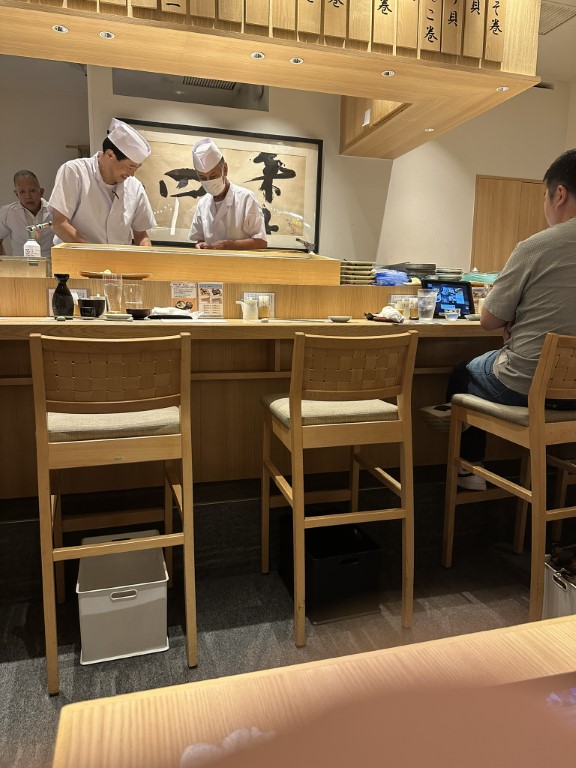
After returning to the tram stop and Hiroshima station, we went looking for lunch, having eaten nothing but those chalky protein bars since the plane the night before. There was a large souvenir and food mall known as 'ekie' at the entrance to the station so we wandered that for awhile, a little confused how to be seated at any of the restaurants as it was mid-afternoon and there were no lines and few customers. Sushi Hiroshima Ajiroya looked interesting and J. R. saw someone at the cash register there and she directed us to a booth and gave us an iPad with the menu in English. We ordered a couple of very good sushi rolls and some sashimi along with two large glasses of Asahi Dry beer, which was a perfect first meal in Japan.
We stopped by e's time cafe & Andersen on our way out of the station to purchase some pastries which we figured we would either eat later that night or have for breakfast the next morning.
We walked the short distance to our hotel, where our room was ready, so we claimed our luggage and did a little repacking to allow us not to have to dig through both bags the next few days. This was derailed a little when J. R. could not find his rain jacket, which at the last minute he had packed into a different packing cube. We hooked the Roku up to the TV and watched a few episodes of Ted Lasso on Apple TV since Netflix and Hulu would not work out of country and tried to stay awake.
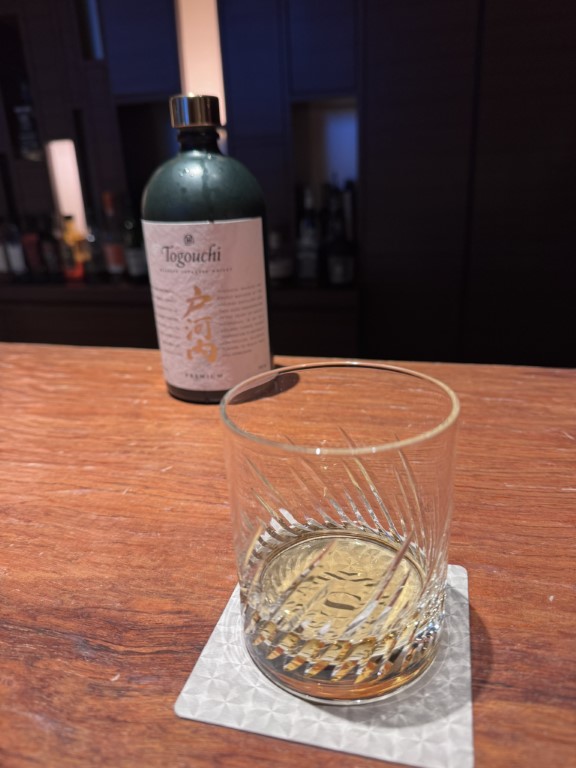
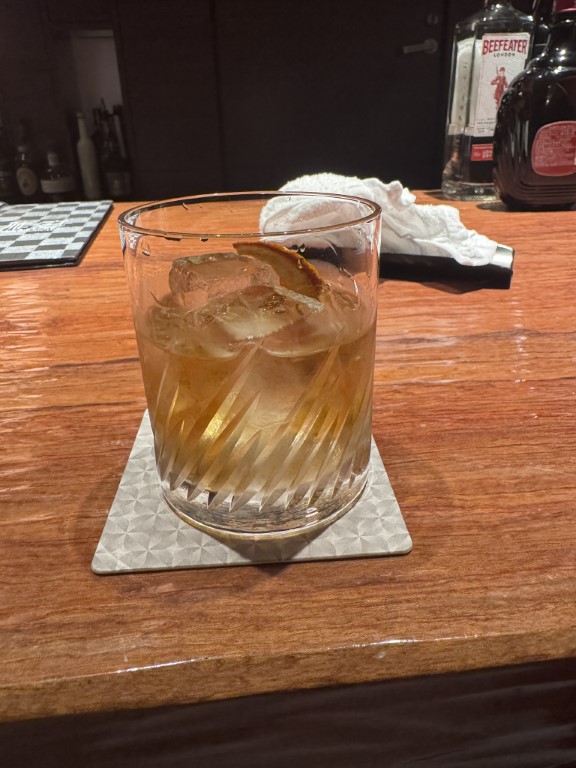
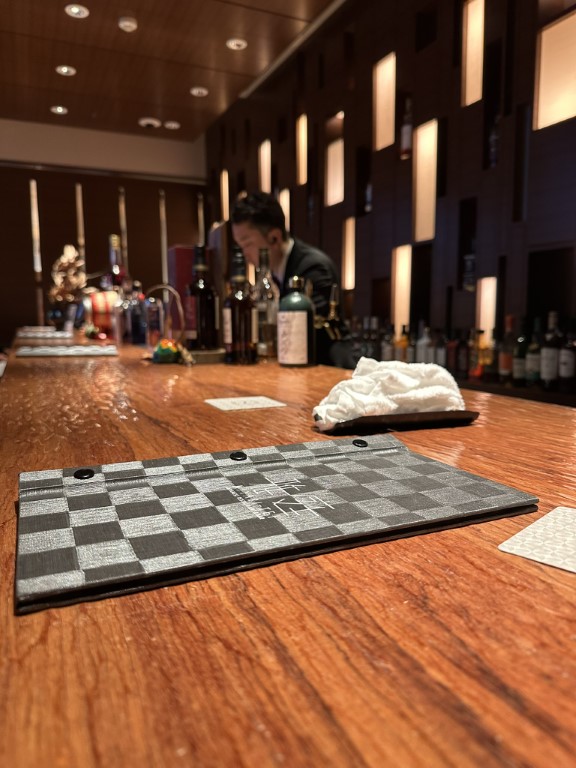
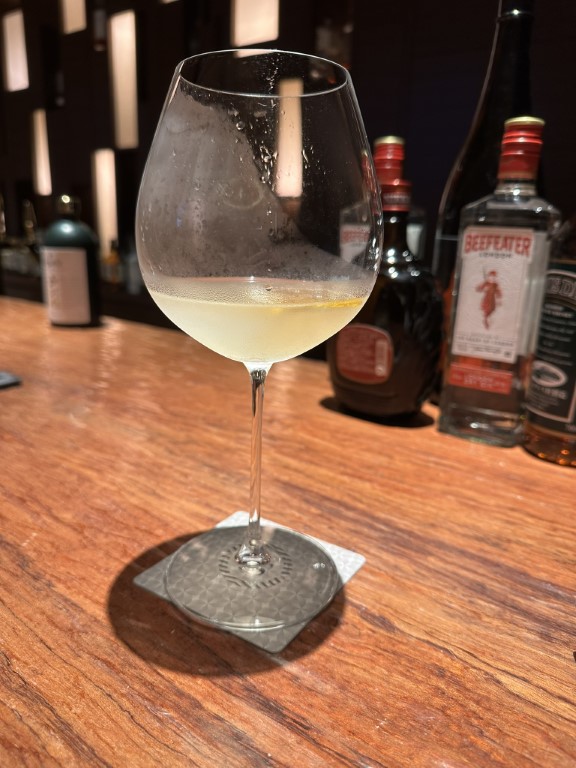
The Miyabi-Tei Bar was doing half-priced happy hour specials at 17:00 so we headed to the bar where J. R. had a Japanese whiskey and Janie had a couple of sakes. While the whiskey was good, J. R. didn't find as much difference as he had hoped in Japanese whiskeys and decided he preferred to stick with his scotch. He ordered the Hiroshima To The World cocktail next, which used Jack Daniels, Homeishu liquor, Yuzu bitters, Pedro Ximenez sherry and Wasanbon sugar to make what the bartender called a "Japanese Old Fashioned". The bar would have been enjoyable were it not for a group of loud Australians spouting their views on American politics. We were glad when they left and headed to the buffet.
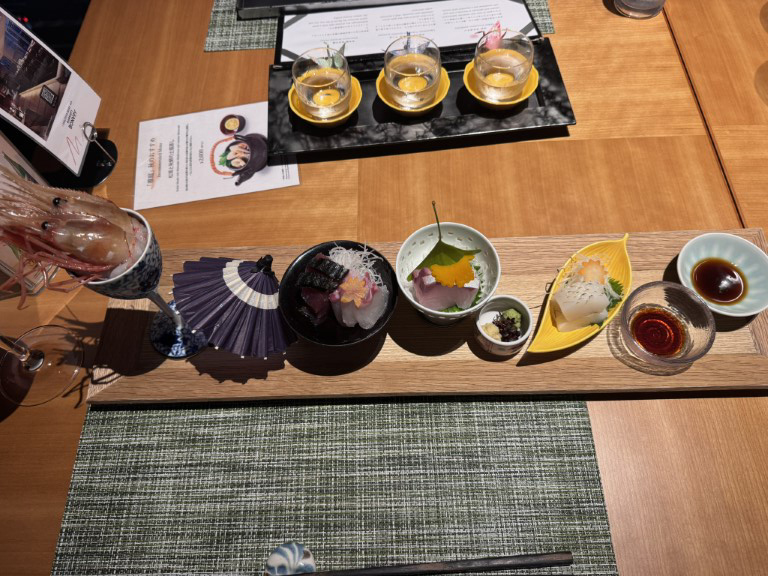
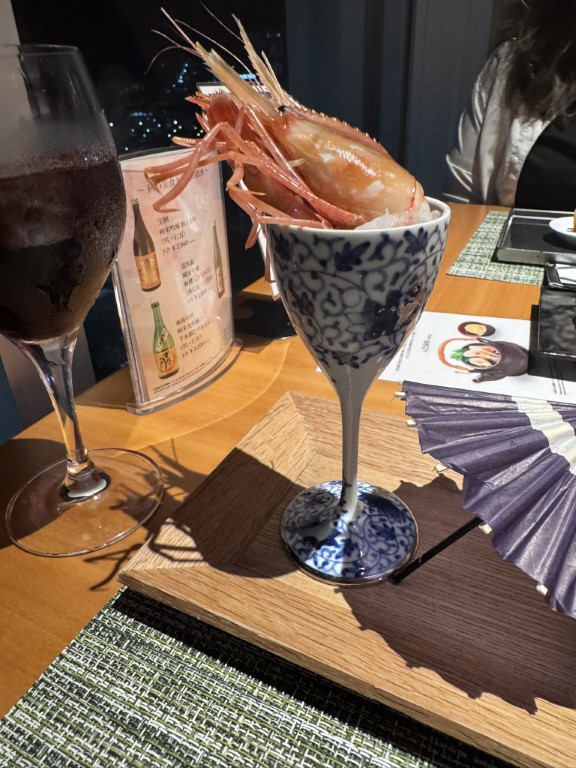
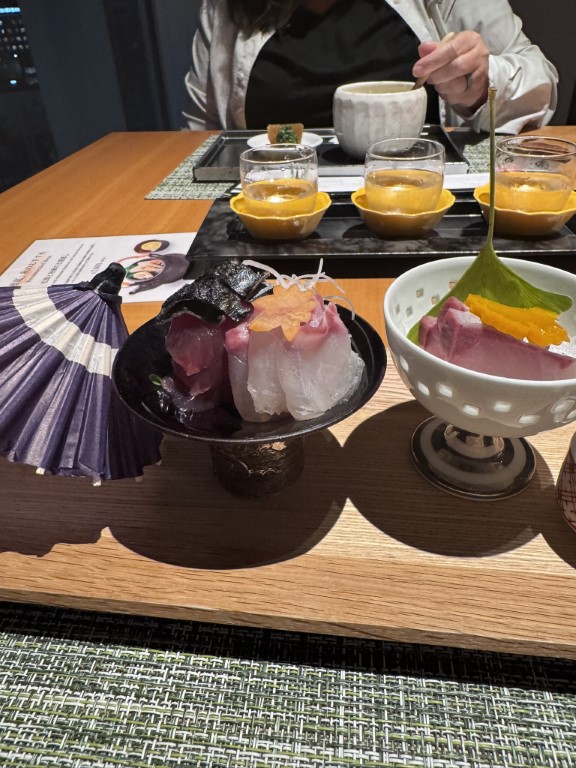
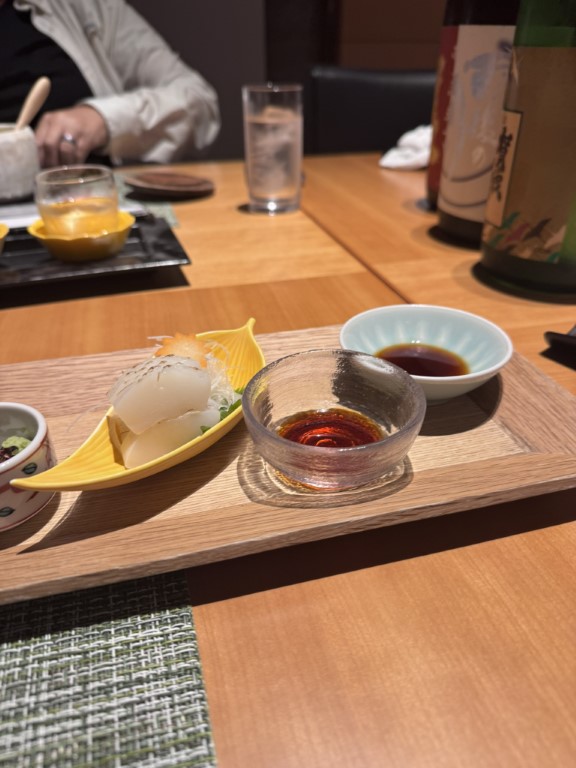
The bartender gave us a coupon for a discount at the Japanese Restaurant Miyabi-Tei, which was practically empty when we arrived. J. R. ordered a sashimi and nigiri platter, which was very good, but overpriced, as most hotel restaurants are. Janie had a sake flight to go along with her rice bowl. Finally jet lag took over again and we turned in for the night after dinner.